US Plywood Import Data 2025: Top Plywood Buyers & Importers in USA
US plywood imports hit $3.16B in 2024 with strong growth in 2025. Explore plywood import data, top plywood importers in USA & trends in importing plywood to US.
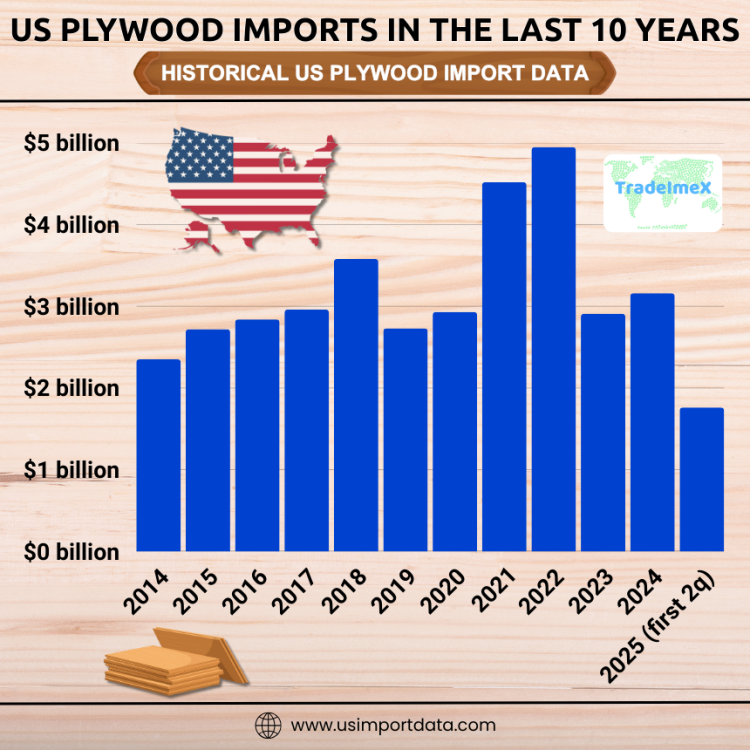
The United States plywood import market moved through a period of slow growth in 2022 and 2023 before entering a sharper and more strategic rebound during 2024 and early 2025. Although overall plywood demand in the country is still shaped by construction cycles, housing starts, and industrial manufacturing, the import data from 2024–25 reveals bigger structural changes. The US is importing more high-value plywood, sourcing from a more diversified supplier mix, and responding to new price and quality pressures that did not exist even a few years earlier. According to the US import data and plywood import data of the USA, the total value of US plywood imports reached $3.16 billion in 2024, an 8% increase from the previous year. According to the US plywood import data, the US imported plywood worth $1.76 billion in the first two quarters of 2025. Plywood importers in USA continue to expand their sourcing networks as importing plywood to US markets grows along with rising construction and furniture demand.
According to recent plywood import data, every major plywood importer aims to import plywood of higher quality, especially as more companies choose to import birch plywood for premium applications. With a diverse base of plywood buyers across construction, cabinetry, and interior manufacturing, many still ask: Is plywood imported in large volumes today? The answer is yes, imports remain essential to meet the country’s growing material requirements.
The USA is the largest plywood importer in the world, as per the global trade data. The total quantity of US plywood import volume exceeded 5 million cubic meters. The value of hardwood plywood imported into the United States increased by 13%, with large increases coming from Vietnam and Indonesia. This blog takes a data-driven look at the state of US plywood imports, the top exporters supplying the American market, the top importing companies, and the trends shaping plywood trade through 2025. Every section is written to give manufacturers, distributors, suppliers, and stakeholders a clear understanding of what is happening now and what might shift next.
The State of US Plywood Imports in 2024–25
A Market That Rebounded After Two Flat Years
The US imports of hardwood plywood surged in 2024. Hardwood plywood imports into the United States reached an estimated 2.76 million cubic metres in 2024, a slight increase compared with the previous year. The growth rate was modest, less than one percent in volume terms. But the volume number tells only part of the story.
The value of plywood imports grew significantly faster. Total import value rose by roughly 13 percent, moving above 1.7 billion dollars in 2024. This gap between volume and value signals that US importers purchased more premium plywood rather than merely increasing overall quantity.
Sharp Monthly Growth in Early 2025
In March 2025 alone, the United States imported about 350,000 cubic metres of plywood, the highest monthly volume since mid-2023. This sharp jump reflects a combination of inventory replenishment, rising construction demand, and stronger orders from furniture manufacturers.
Early-2024 Surge Set the Tone
Between January and May 2024, plywood import volumes rose by more than 58 percent compared with the same period one year earlier. Even though full-year volume growth eventually leveled out, the early-year surge signaled what many suppliers already knew: US buyers were returning to the market with more confidence, more projects to fulfill, and more focus on quality.
US Plywood Imports by Country: Where Does the US Import Plywood From?
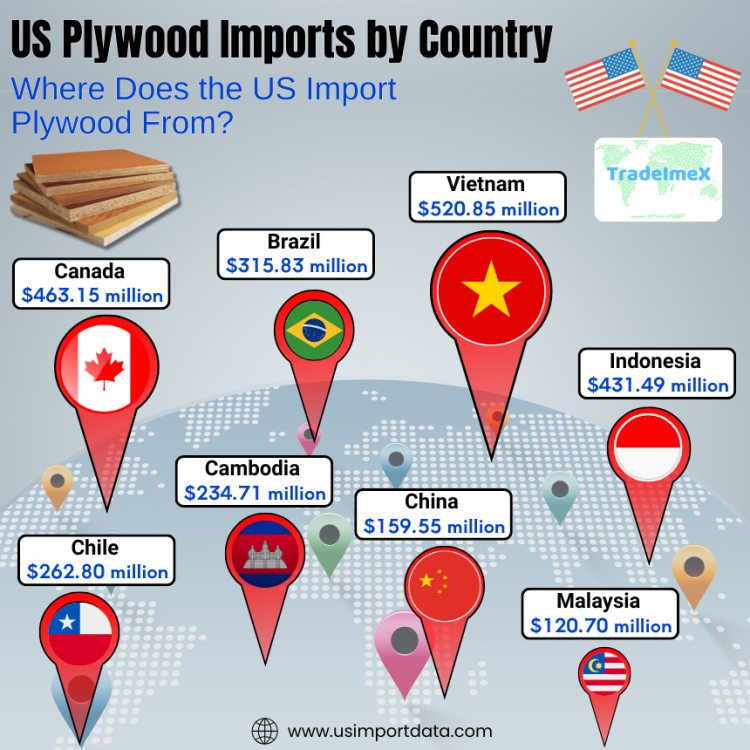
US plywood imports by country play a significant role in the United States' plywood industry. As a major consumer of plywood products, the US imports plywood from various countries worldwide to meet domestic demand. The leading sources of plywood imports into the US include Vietnam, Canada, Brazil, Russia, and Chile. Each of these countries contributes significantly to the US' plywood supply chain, providing a diverse range of plywood products to cater to different industry needs. The top 10 plywood suppliers to the US, as per the US shipment data & US plywood import statistics for 2024-25, include:
1. Vietnam: $520.85 million (16.5%)
Vietnam is the leading supplier of plywood to the US, accounting for 16.5% of the total imports, as per the data on US plywood imports from Vietnam by HS code. The country's competitive pricing and high-quality plywood products have made it a preferred choice for American buyers. Vietnamese plywood is known for its durability and versatility, making it ideal for a wide range of applications.
2. Canada: $463.15 million (14.6%)
Canada is another major exporter of plywood to the US, with a market share of 14.6%. Canadian plywood is highly regarded for its strength and reliability, making it a popular choice for construction projects in the US. The proximity of Canada to the US also makes it a convenient source of plywood imports.
3. Indonesia: $431.49 million (13.6%)
Indonesia is a prominent player in the global plywood market, supplying 13.6% of the plywood imports to the US. Indonesian plywood is known for its sustainable sourcing practices and eco-friendly production methods. The country's rich natural resources and skilled workforce contribute to the high quality of its plywood products.
4. Brazil: $315.83 million (10%)
Brazil is a significant supplier of plywood to the US, capturing a 10% market share, as per the data on US plywood imports from Brazil. Brazilian plywood is prized for its exotic hardwoods and unique grain patterns, making it a popular choice for high-end furniture and interior design projects. The country's vast forests provide a steady supply of raw materials for plywood production.
5. Chile: $262.80 million (8.3%)
Chile is a leading exporter of plywood to the US, with an 8.3% market share. Chilean plywood is known for its uniformity and consistency, making it a reliable choice for construction and industrial applications. The country's efficient production process and strict quality control measures ensure that its plywood meets international standards.
6. Cambodia: $234.71 million (7.4%)
Cambodia is an emerging player in the plywood market, supplying 7.4% of the plywood imports to the US. Cambodian plywood is valued for its strength and durability, making it suitable for a wide range of applications. The country's competitive pricing and fast delivery times have contributed to its growing popularity among American buyers.
7. China: $159.55 million (5%)
China is a major exporter of plywood to the US, accounting for 5% of the total imports. Chinese plywood is known for its affordability and wide range of available options, making it a versatile choice for various construction and manufacturing needs. The country's large plywood industry and extensive distribution network ensure a steady supply of plywood to the US market.
8. Malaysia: $120.70 million (3.8%)
Malaysia is a key supplier of plywood to the US, with a market share of 3.8%. Malaysian plywood is distinguished for its smooth finish and moisture resistance, making it suitable for outdoor applications and humid environments. The country's advanced production facilities and stringent quality control measures ensure that its plywood meets the highest standards.
9. Russia: $84.85 million (2.7%)
Russia is a significant player in the plywood market, contributing 2.7% of the plywood imports to the US. Russian plywood is known for its strength, stability, and affordability, making it a popular choice for construction projects and industrial applications. The country's vast forests and advanced manufacturing technology enable it to produce high-quality plywood products.
10. Ecuador: $82.96 million (2.6%)
Ecuador is a rising star in the plywood market, supplying 2.6% of the plywood imports to the US. Ecuadorian plywood is prized for its unique grain patterns and natural beauty, making it a favored choice for decorative applications. The country's sustainable forestry practices and commitment to environmental conservation appeal to environmentally conscious buyers in the US.
Top Plywood Importers & Buyers in USA: US Plywood Importers Database
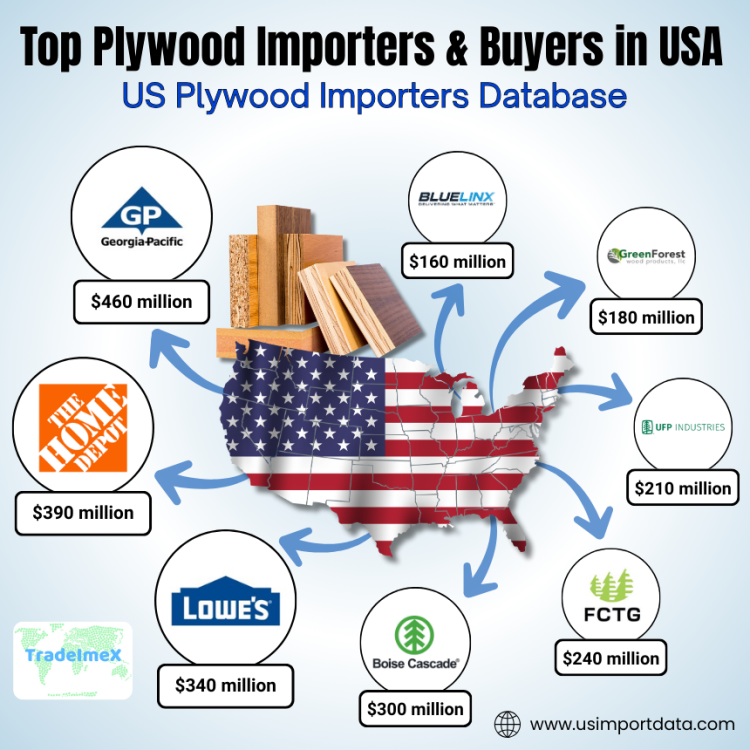
The US Plywood Importers Database is a valuable resource for businesses looking to connect with top plywood importers and buyers in the USA. This comprehensive database is a vital resource for companies in the plywood industry looking to expand their market presence and establish strategic business relationships with key players. The leading plywood importers in the USA, as per the US plywood importers data & plywood buyers list for 2024-25, include:
|
Rank |
Company Name |
Approx. Import Value 2024 ($) |
Major Imported Plywood Types |
Top Source Countries |
|
1 |
$460 million |
Softwood plywood, structural plywood, sheathing panels |
Brazil, Canada, Chile |
|
|
2 |
Home Depot (THD Imports Inc.) |
$390 million |
Hardwood plywood, construction plywood, furniture-grade panels |
China, Indonesia, Vietnam |
|
3 |
Lowe’s Companies Inc. |
$340 million |
Hardwood plywood, marine plywood, cabinet-grade plywood |
Vietnam, Malaysia, Canada |
|
4 |
Boise Cascade Company |
$300 million |
Structural plywood, engineered wood panels |
Brazil, Chile, Canada |
|
5 |
Forest City Trading Group (FCTG) |
$240 million |
Hardwood plywood, veneer plywood, general plywood |
Indonesia, Vietnam, China |
|
6 |
UFP Industries / UFP Global Holdings |
$210 million |
Softwood plywood, CDX plywood, construction panels |
Brazil, Chile, Mexico |
|
7 |
Green Forest Products LLC |
$180 million |
Hardwood plywood, decorative plywood, veneer-faced panels |
Vietnam, Indonesia, China |
|
8 |
BlueLinx Corporation |
$160 million |
Softwood plywood, multi-ply construction plywood |
Canada, Brazil, Chile |
|
9 |
Lumin Forest Products / Lumin America |
$150 million |
Softwood plywood, structural plywood |
Uruguay, Chile, Brazil |
|
10 |
Interra USA Inc. |
$120 million |
General plywood, hardwood plywood, commercial plywood |
Vietnam, China, Malaysia |
US Plywood Imports in the Last 10 Years: Historical US Plywood Import Data
|
Year of Imports |
US Plywood Import Value ($) |
|
2014 |
$2.35 billion |
|
2015 |
$2.72 billion |
|
2016 |
$2.84 billion |
|
2017 |
$2.96 billion |
|
2018 |
$3.58 billion |
|
2019 |
$2.73 billion |
|
2020 |
$2.93 billion |
|
2021 |
$4.52 billion |
|
2022 |
$4.95 billion |
|
2023 |
$2.91 billion |
|
2024 |
$3.16 billion |
|
2025 (first 2 quarters) |
$1.76 billion |
Where the Plywood in the US Comes From
Top Supplier Countries to the US Market
Even in a shifting geopolitical and business environment, the United States has maintained a diverse portfolio of plywood-supplying countries. The following countries were the top plywood exporters to the US in the latest full year of data:
|
Rank |
Country |
Role in US Plywood Supply |
|
1 |
Vietnam |
Largest supplier, particularly strong in hardwood plywood, veneer-faced panels, & furniture-grade material. |
|
2 |
Canada |
Key supplier of softwood plywood and temperate hardwood plywood. |
|
3 |
Indonesia |
Major producer of tropical hardwood plywood, especially meranti and mixed hardwood. |
|
4 |
Brazil |
Strong supplier of softwood plywood (pine-based) and structural plywood. |
|
5 |
Chile |
A growing source of pine plywood, especially construction-grade panels. |
Beyond these top five, the United States also imports meaningful quantities from countries such as China, Finland, Malaysia, Thailand, and Peru. Different suppliers specialize in different plywood grades, species, and price points.
Supplier Performance in 2024
Imports from Southeast Asia expanded at an exceptional pace:
-
Indonesia increased plywood shipments to the US by about 41 percent.
-
Vietnam increased shipments by roughly 44 percent.
The Southeast Asian growth reflects strong production capacity, competitive pricing, and increased US demand for hardwood-faced plywood, furniture-grade plywood, and specialty laminated panels.
Canada continues to dominate the supply of softwood plywood, and Latin American suppliers such as Brazil and Chile remain essential for construction plywood due to their vast softwood plantations.
Why Supplier Diversification Matters
The US plywood market depends heavily on imports because domestic production cannot always meet demand for hardwood plywood, tropical wood species, or specific product types. Diversification helps American buyers:
-
reduce exposure to logistical disruptions
-
manage pricing and availability risks
-
maintain consistent quality across product lines
-
secure different grades for different industries
In 2024 and early 2025, supplier diversity helped stabilize the market during periods of shipping volatility and rising input costs.
Why US Plywood Imports Grew: Key Demand and Supply Forces
To understand plywood import patterns, it helps to look at the forces behind them.
1. Construction Recovery and Renovation Activity
The revival of residential renovation, commercial building, and infrastructure projects in 2024 exerted upward pressure on plywood demand. Builders needed cabinetry, plywood, wall panels, flooring substrates, and exterior sheathing in large quantities again.
2. Strong Furniture and Interior Manufacturing
Interior designers and furniture producers increased orders for hardwood and decorative plywood. The trend toward custom interiors, built-in furniture, and high-end finishing contributed to the rise in imported higher-grade panels.
3. More Purchases of High-Value Plywood
The 13 percent rise in total import value, with only minimal volume growth, says a lot. US buyers were not just buying more plywood; they were buying better plywood. This includes:
-
hardwood plywood
-
veneer-faced plywood
-
moisture-resistant plywood
-
pre-finished panels
-
composite and laminated specialty plywood
These products cost more per unit but are essential for premium construction and interior work.
4. Restocking After Slower Years
Distributors, wholesalers, and major retailers spent much of 2023 reducing inventory due to high borrowing costs and slower sales. In 2024, they reversed course, rebuilding inventory to normal levels, which contributed to the massive early-year import surge.
5. Shifting Global Timber and Resin Prices
Raw-material costs for plywood, logs, veneers, resin, and adhesives rose in various regions through 2024. Higher shipping and production costs increased the price per cubic metre of plywood. Because the US imports a large share of its supply, these price shifts heavily influence import value.
6. Regulatory and Sustainability Pressures
There is a growing demand for certified plywood that meets sustainability and legality requirements. Certifications and traceability add cost but also increase demand for certain suppliers and reduce the market audience for others.
Top US Plywood Importing Companies
-
Green Forest Products LLC: A well-known distributor with a strong presence in hardwood plywood. Imports consistently from Asia.
-
Resident Home LLC: A furniture-related company that imports plywood for components, manufacturing, or packaging.
-
Blue Star International Trade Inc.: A trading company that handles significant plywood volumes across multiple countries.
-
Tesla, Inc.: Although surprising at first glance, large manufacturing companies sometimes import plywood for packaging, crating, tooling, mold construction, and factory uses.
These shipment counts do not necessarily reveal total volume or dollar value, but they show how diverse the buyer base actually is. Beyond these, the larger US plywood import ecosystem includes:
-
national building-material distributors
-
regional construction-supply companies
-
furniture manufacturers
-
home-improvement retailers
-
wholesalers supplying contractors and millwork shops
The largest plywood importers in volume terms are often not publicly listed by name but are usually distributors operating in multiple states, large wholesalers, and specialized building-supply chains.
Detailed Trends Shaping Plywood Imports in 2024–25
1. A Shift Toward Premium Grades
US buyers are leaning more heavily into hardwood plywood, veneer plywood, and specialized laminated sheets. This trend directly correlates with the rise in import value over volume and the increased market share of suppliers like Vietnam and Indonesia.
2. Southeast Asia Strengthens Its Position
Vietnam and Indonesia now stand beside Canada as core suppliers. Both countries offer competitive pricing, strong quality control, and wide availability of hardwood plywood used for cabinets, furniture, and interiors.
3. Latin American Suppliers Hold Steady
Brazil and Chile have become indispensable for softwood plywood, especially structural plywood used in construction. US builders rely on this supply to meet project timelines, as domestic mills alone cannot fill the entire demand.
4. Sustainability Is No Longer Optional
More builders, retailers, and manufacturers insist on legal, certified wood. This increases demand for suppliers capable of meeting American environmental and compliance standards.
5. Market Consolidation Among Buyers
Large US distributors continue to strengthen their positions. Their larger purchasing power creates pressure on smaller importers and sometimes reduces price volatility for end consumers.
Buyers are still planning further ahead than they did before 2020.
Challenges the US Plywood Market Faces Going Forward
1. Cost Pressures
Price volatility for timber, fuel, and resin means plywood prices may remain unpredictable. Importers need strong financial planning and diversified supply sources.
2. Supply Chain Risks
The global nature of plywood production means disruptions, storms, political changes, trade restrictions, and shipping delays can quickly impact US availability.
3. Tariff and Regulatory Uncertainty
Plywood imports have a history of being affected by anti-dumping duties, tariff adjustments, and trade policy changes. Businesses must manage this uncertainty.
4. Competition from Alternative Panels
While plywood demand remains strong, the market faces competition from engineered panels like OSB, MDF, and LVL. These products evolve quickly and may occasionally reduce plywood demand for certain applications.
5. Sustainability and Compliance Costs
Sourcing legal and certified wood adds cost for suppliers and buyers but is increasingly unavoidable. Compliance failures can result in shipment delays, fines, and reputational damage.
What This Means for Stakeholders
For Importers
-
Expand supply networks to balance risk.
-
Focus on premium plywood that yields higher margins.
-
Build long-term contracts to lock in pricing and reliability.
For Foreign Suppliers
-
Investment in certification and traceability can open more US market share.
-
Offering consistent quality across shipments is essential.
-
Product differentiation (fire-rated, MR-grade, pre-finished) will matter more over time.
For Builders and Manufacturers
-
Expect continued availability of premium plywood, but at higher prices.
-
Strategic bulk purchasing can reduce risk.
-
Demand for interior-grade and decorative plywood will likely remain strong.
For Analysts and Policy Makers
-
Rising import dependence highlights the need for trade stability.
-
Monitoring sustainability and compliance issues will become even more important.
-
Domestic plywood capacity may need evaluation in the long term.
Outlook for 2025–26
Based on current demand levels, supplier activity, and inventory cycles, the US plywood market is positioned for steady growth in 2025, especially in:
-
hardwood plywood
-
decorative veneer plywood
-
construction-grade softwood plywood from Latin America
If construction and interior manufacturing remain strong, the US could see another year of rising import value, even if overall import volume increases only slightly. Possible headwinds include shipping disruptions, higher raw material costs, or changes in tariff policy. But if those remain manageable, imports should continue to support the country’s construction and manufacturing needs well into 2026.
Conclusion and Final Thoughts
The US plywood import market in 2024–25 reflects both stability and transformation. While volume growth remained moderate, the shift toward higher-quality plywood marks a major change in purchasing behavior. Southeast Asian suppliers expanded their role, Latin American suppliers held their ground, and Canadian plywood remained indispensable.
For buyers, suppliers, manufacturers, and analysts, understanding these trends is critical. The market is entering a phase where strategy, diversification, and quality control matter more than ever. Plywood is no longer just a commodity; it sits at the center of multiple fast-moving industries, including construction, furniture, interiors, and packaging. The companies that prepare for flexibility and long-term sourcing stability will stay ahead of the next shifts in the US plywood trade.
For more information on the latest US export-import data, or to search live data on US plywood imports by country, visit USImportdata. Contact us at info@tradeimex.in for customized trade reports, market insights, and a verified database of the top plywood importers & buyers in the USA, tailored to your business needs.
What's Your Reaction?