Exploring US Tomato Imports Report 2025: USA Tomato Importers & Buyers Database
Explore US tomato imports data 2025, detailed US tomato imports by country, verified tomato importers & tomato buyers in the US with trusted trade data.
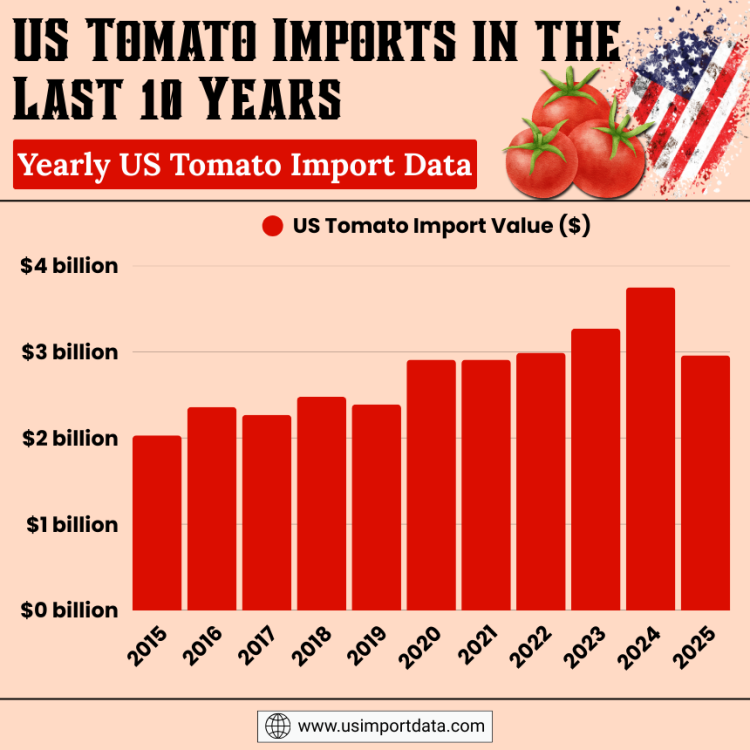
Tomatoes are one of the most consumed vegetables in the United States, eaten fresh, cooked, canned, or processed into sauces, juices, and condiments. Despite strong domestic production, the United States imports large volumes of tomatoes year-round to meet consumer and industrial demand, especially in seasons when local harvests are limited. According to the latest US import data and tomato import data of the USA, the total value of US tomato imports reached a record high of $3.75 billion in 2024, a 15% increase from the previous year. According to the US tomato import data, the US imported tomatoes worth $2.96 billion in 2025.
The USA is the largest tomato importer in the world, according to global trade data. The U.S. tomato import market continues to exhibit significant activity, characterized by diverse importer networks, global trade shifts, and evolving buyer databases that are vital for suppliers, traders, analysts, and investors alike. This report dives into the latest data around U.S. tomato imports, the structure of the import market, shipment statistics, country-level supply trends, and a detailed overview of tomato importers and buyers in the United States as of 2025. It also touches on emerging trade dynamics that are shaping the outlook for this staple agricultural commodity.
Landscape of Tomato Imports in the United States
Scale and Value of Tomato Imports
According to a USDA report on importing tomatoes, the United States was the world’s largest importer of fresh or chilled tomatoes, with import value reaching approximately US $3.76 billion and quantity totaling around 2.13 billion kilograms (fresh or chilled category, HS code 070200).
This makes the U.S. market by far the most valuable importer on the planet, exceeding Germany, France, and the European Union in terms of absolute import spend.
Key takeaways:
-
Total value of fresh or chilled tomatoes imported in 2024: US $3.76 billion.
-
Total volume: over 2.13 billion kg.
-
The U.S. share of global tomato import value is greater than the next largest European importers combined.
While fresh tomatoes represent the largest share, other tomato categories, such as prepared or processed tomatoes (HS code 2002) are also significant. In the period Jan-Jul 2025, imports of prepared tomatoes into the U.S. reached roughly US $108.18 million and nearly 60 thousand tons, growing year-over-year in both value and volume.
US Tomato Imports by Country: Where Does the US Import Tomatoes From?
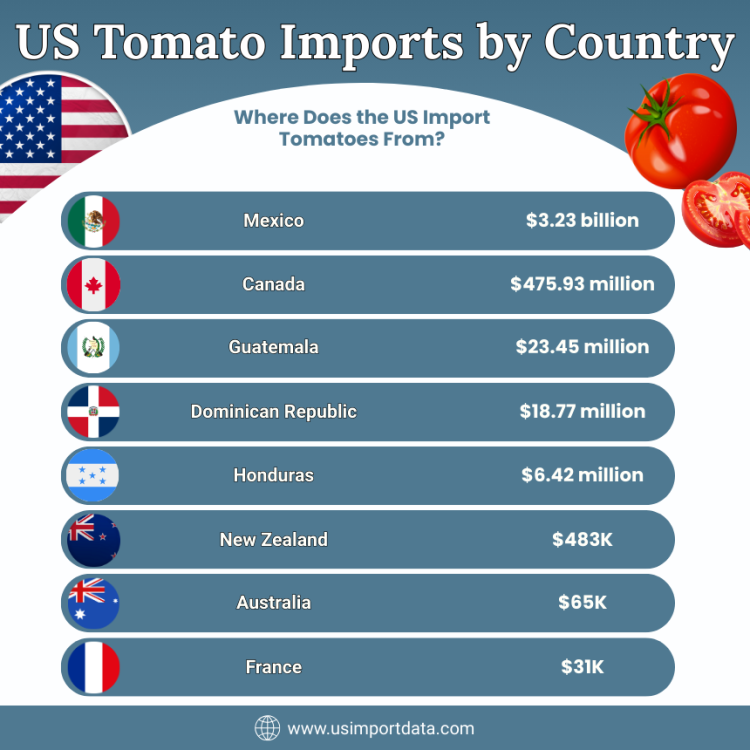
US tomato imports by country dynamics exemplify a crucial aspect of the US agricultural supply chain. Mexico holds a significant share of the tomatoes imported to the US, accounting for the lion's share. Other countries, such as Canada and the Netherlands, also contribute significantly to this import flow. These strategic relationships highlight the importance of international trade in ensuring a consistent supply of fresh tomatoes for consumers across the United States. The top 10 countries from which the US imports tomatoes, as per the US shipment data for 2025, include:
1. Mexico: $3.23 billion
Mexico is by far the largest supplier of tomatoes to the United States, accounting for a staggering 86% of all tomato imports. The proximity of Mexico to the US, as well as its favorable climate for tomato cultivation, makes it an ideal supplier. Mexican tomatoes are known for their quality and taste, making them a popular choice for consumers in the US. Mexico’s proximity and its year-round greenhouse and field production make it an indispensable partner in the U.S. tomato supply chain, especially during winter and early spring when U.S. domestic output typically declines.
2. Canada: $475.93 million
Canada is another significant source of tomato imports for the US, although its share is much smaller compared to Mexico. Canadian tomatoes are valued for their freshness and are often imported during the winter months when domestic production is lower. The proximity of Canada to the US also helps in reducing transportation costs and ensuring quick delivery.
3. Guatemala: $23.45 million
Guatemala is a key player in the US tomato import market, providing a steady supply of tomatoes to meet consumer demand. The favorable climate and growing conditions in Guatemala make it an ideal location for tomato cultivation. Guatemalan tomatoes are known for their vibrant color and delicious flavor, making them a popular choice for salads, sauces, and other dishes.
4. Dominican Republic: $18.77 million
The Dominican Republic is another important source of tomato imports for the US, offering a variety of tomato varieties to cater to different consumer preferences, as per the data on US tomato imports from the Dominican Republic by HS code. The warm climate and rich soil in the Dominican Republic provide an ideal environment for tomato cultivation, resulting in high-quality tomatoes that are in demand in the US market.
5. Honduras: $6.42 million
Honduras may not be a top tomato supplier to the US, but it still plays a significant role in meeting the demand for tomatoes in the US market. Honduran tomatoes are known for their sweetness and juiciness, making them a popular choice for fresh consumption as well as for processing into various tomato products.
6. New Zealand: $483K
Despite its relatively small share of the US tomato import market, New Zealand is known for its high-quality tomatoes that are exported to specialty markets in the US. New Zealand tomatoes are prized for their unique flavor and texture, making them a sought-after choice for gourmet chefs and discerning consumers.
7. Australia: $65K
Australia may not be a major player in the US tomato import market, but its tomatoes are valued for their freshness and flavor. Australian tomatoes are often imported to the US during the off-season when domestic production is low, providing consumers with a year-round supply of quality tomatoes.
8. France: $31K
France may be more famous for its wine and cheese, but it also exports tomatoes to the US market. French tomatoes are known for their rich flavor and vibrant colour, making them a popular choice for salads, sandwiches, and other dishes where the taste of the tomato is a key component.
9. Micronesia: $29K
Micronesia may be a small island nation, but it still plays a role in supplying tomatoes to the US market. Micronesian tomatoes are known for their unique taste and texture, reflecting the tropical climate and rich soil in which they are grown.
10. Chile: $23K
Chile is another minor player in the US tomato import market, but its tomatoes are valued for their quality and consistency. Chilean tomatoes are often imported to the US to supplement domestic production and meet the demand for tomatoes during the winter months.
Top Tomato Buyers in the USA: US Tomato Importers Database & Shipment Records
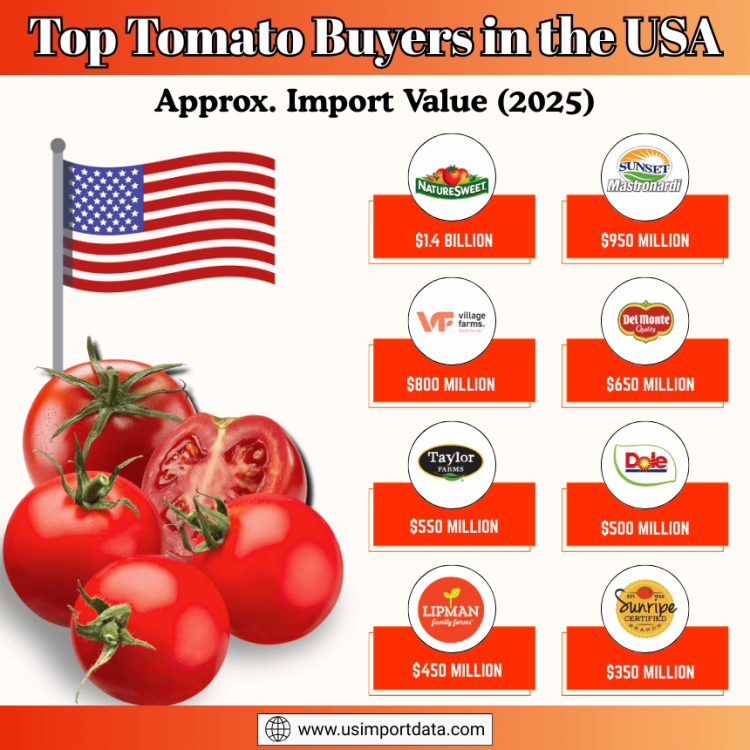
When it comes to the top tomato buyers in the USA, the US Tomato Importers Database and Shipment Records serve as invaluable resources for businesses looking to establish partnerships or track industry trends. This database offers comprehensive insights into the key players shaping the tomato import market, enabling companies to make informed decisions and strategize effectively. Across major trade records, the broader import ecosystem shows:
-
Over 61,000 documented tomato import shipments into the U.S. during a recent 12-month period.
-
These shipments were supplied by thousands of foreign exporters to more than 3,600 distinct U.S. buyers.
-
Data on fresh tomatoes alone shows at least 119 U.S. buyers receiving imports from about 202 international suppliers.
This diversity of buyers reflects the complex and multi-tiered nature of the U.S. tomato supply chain, from wholesale distributors to fresh produce aggregators and food manufacturing businesses. The leading tomato importers & buyers in the USA, as per the US tomato buyers data for 2025, include:
|
Rank |
Company Name |
Approx. Import Value (2025) |
Top Imported Tomato Types |
Top Import Source |
|
1 |
$1.4 billion |
Grape tomatoes, cherry tomatoes, vine-ripe |
Mexico |
|
|
2 |
Mastronardi Produce (Sunset®) |
$950 million |
Greenhouse tomatoes, cocktail, Roma |
Canada, Mexico |
|
3 |
Village Farms International |
$800 million |
Beefsteak, Roma, cherry (greenhouse) |
Canada, Mexico |
|
4 |
Fresh Del Monte Produce Inc. |
$650 million |
Round tomatoes, Roma, grape |
Mexico, Guatemala |
|
5 |
Taylor Farms (Fresh Foods Division) |
$550 million |
Roma, diced fresh tomatoes (foodservice grade) |
Mexico |
|
6 |
Dole Fresh Vegetables |
$500 million |
Roma, slicing tomatoes |
Mexico |
|
7 |
Lipman Family Farms |
$450 million |
Roma, vine-ripe, grape tomatoes |
Mexico |
|
8 |
Pacific Tomato Growers |
$350 million |
Roma, field-grown round tomatoes |
Mexico |
|
9 |
Sysco Corporation |
$200 million |
Roma, cherry, processed tomato products |
Mexico, Italy |
|
10 |
US Foods Holding Corp. |
$180 million |
Roma, grape, prepared tomatoes |
Mexico, Canada |
US Tomato Imports in the Last 10 Years: Yearly US Tomato Import Data
|
Year of Imports |
US Tomato Import Value ($) |
|
2015 |
$2.03 billion |
|
2016 |
$2.36 billion |
|
2017 |
$2.27 billion |
|
2018 |
$2.48 billion |
|
2019 |
$2.39 billion |
|
2020 |
$2.91 billion |
|
2021 |
$2.91 billion |
|
2022 |
$2.99 billion |
|
2023 |
$3.27 billion |
|
2024 |
$3.75 billion |
|
2025 |
$2.96 billion |

US Tomato Importer Profiles and Market Roles
Importers in the tomato market typically fall into several broad categories:
1. Produce Importers & Distributors
These firms handle imported fresh and chilled tomatoes, often supplying regional grocery chains, food hubs, and fresh produce markets. Examples include:
-
Specialty fresh produce brokers with direct sourcing agreements in Mexico
-
Importers focused on organic or premium heirloom tomatoes
-
Regional distributors linking import containers to cold storage networks
These businesses prioritize consistent quality, cold chain, and rapid delivery due to the perishable nature of fresh tomatoes.
2. Food Processors & Industrial Buyers
Large food manufacturers import tomatoes or tomato paste in bulk for processing into sauces, canned products, juices, and other value-added goods. Prepared tomatoes and paste typically fall under HS code 2002, and Italy, Chile, and Turkey are notable suppliers for this category.
Industrial buyers focus on stable volume supply and often engage in forward contracts to hedge against seasonal volatility.
3. Multi-Channel Retail & Food Service Chains
Major supermarket chains, restaurant groups, and food service distributors import tomatoes indirectly through national distributors. Although not always direct importers themselves, these entities influence purchasing patterns and often negotiate pricing and delivery schedules with buyers in the import chain.
Market Trends and Strategic Shifts in 2025
Trade Policy Shocks and Tariff Regimes
Trade policy has had a material impact on U.S. tomato import dynamics, particularly in 2025. Notably:
-
The U.S. government withdrew from a longstanding tomato suspension agreement with Mexico, reinstating duties on most fresh Mexican tomatoes. The tariff is approximately 17–21 percent, depending on specific import categories and enforcement terms for 2025.
This shift marks a significant policy change after decades of relatively stable trade arrangements. Historically, Mexican tomato imports were exempt from high tariffs under a suspension agreement that included pricing and quality provisions. The termination and reimposition of duties reflect broader efforts to protect domestic growers while reshaping the competitive environment.
Market implications include:
-
Higher landed costs for imported tomatoes, which may be passed on to end consumers.
-
Importers are adjusting sourcing strategies to mitigate tariff costs.
-
Greater interest in alternative suppliers outside Mexico (e.g., Canada, Guatemala).
Conversely, importers and restaurant associations have warned that such duties could reduce the availability of popular varieties (like vine-ripened and cherry tomatoes) and increase retail prices.
Seasonal and Supply Chain Dynamics
Tomato imports are highly seasonal, with peak flows aligned to periods when U.S. domestic production slows, particularly late fall through early spring. Mexico’s greenhouse production system plays a key role in ensuring year-round supply, especially for fresh and specialty tomatoes.
However, changing tariff regimes and weather-driven yield variability are prompting importers to diversify tactics:
-
Sourcing more produce from countries with complementary seasons, such as Guatemala and Honduras.
-
Expanding cold storage and import capacity in key U.S. entry ports.
-
Using data-driven forecasting to manage inventory, pricing, and trade risk.
This evolving landscape means importers with strong trade systems and diversified sourcing have a competitive edge.
How Importers Use Trade Data and Buyer Database
Modern tomato import businesses increasingly rely on big data and trade intelligence platforms to optimize strategy. Our exclusive importers & buyers database provides detailed import data & company-level shipment data for US tomato imports, enabling users to:
-
Identify tomato buying patterns and shipment concentrations.
-
Target high-volume importers with outreach campaigns.
-
Spot emerging supplier markets (e.g., new exporters gaining share).
-
Benchmark pricing trends and HS code performance.
Strategic Insights for Suppliers and Exporters
If you’re a tomato exporter targeting the U.S. market, understanding these dynamics is essential. Here are key takeaways:
1. Know the Demand Drivers
-
U.S. import demand is strongest where domestic production falls short, particularly for specialty tomatoes (e.g., vine-ripe, heirloom, and cherry types).
-
Industrial demand for processed tomatoes is also strong, especially from Italy, Chile, and Turkey.
2. Track Policy and Tariff Changes
-
Monitor tariff regimes closely. Duties can materially affect landed costs and price competitiveness.
-
Engage with trade associations and customs brokers for tariff classification strategies and mitigation tactics.
3. Build Relationships With Top Buyers
-
Focus on buyer segments that have demonstrated consistent import activity.
-
Use verified buyer databases to target outreach to produce distributors, food processors, and multi-regional retail chains.
4. Leverage Trade Data Platforms
-
Invest in comprehensive trade data tools to track competitors, supplier movements, shipment volumes, and price trends.
Future Outlook for the U.S. Tomato Import Market
Looking ahead to late 2025 and beyond, several forces will shape the U.S. tomato import environment:
-
Market growth and resilience: With U.S. consumer demand for fresh and processed tomato products remaining robust, imports will likely continue to represent a large portion of total supply, especially in off-season periods.
-
Trade policy evolution: Ongoing negotiations with Mexico and other trading partners will influence tariff structures and competitive positioning. Any adjustments to duty rates or trade agreements will ripple through importer pricing models.
-
Supply chain optimization: Advanced trade, cold chain infrastructure, and digital trade monitoring will become even more critical as importers navigate cost pressures and changing international flows.
-
Diversification of supply sources: While Mexico will remain dominant, importers are exploring supplementary sources to mitigate risk and seasonal gaps.
For businesses, policymakers, and analysts, the 2025 tomato import market offers both opportunities and challenges. Better data, flexible sourcing strategies, and a deep understanding of buyer networks will be key to success in this dynamic sector.
Conclusion and Final Thoughts
In conclusion, the U.S. tomato import market stands at a crossroads of scale, policy shifts, and data-driven sophistication. With nearly US $3.8 billion in annual import value, dominant supplier relationships (particularly with Mexico), and a growing base of importers and buyers powered by trade data, this market continues to be a high-impact component of the broader U.S. food supply chain.
For exporters and suppliers eyeing entry or expansion into the U.S. market, leveraging comprehensive databases, staying ahead of tariff changes, and tailoring offerings to the wide spectrum of U.S. buyers will be essential. Whether in fresh produce aisles or industrial processing plants, tomatoes will remain an enduring and lucrative commodity in international trade.
Want to access the latest US export-import data or search live data on US tomato imports by country? Visit USImportdata and contact us at info@tradeimex.in for customized trade reports, a verified US tomato importers database, and market insights.
What's Your Reaction?