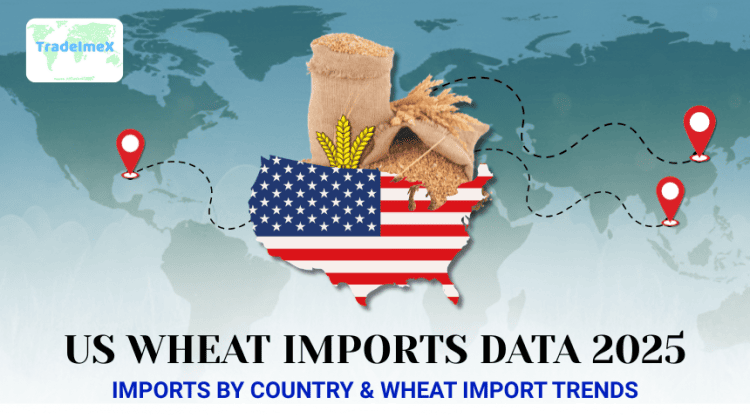
US Wheat Imports Data 2025: Imports by Country & Wheat Import Trends
Explore US wheat imports by country 2025 and discover whether the US imports wheat. Get detailed insights into US wheat imports, key suppliers, and latest trade data.
Wheat plays a central role in the U.S. agricultural system. The country grows a wide range of wheat classes, exports millions of tons each year, and maintains a globally influential position in the wheat market. Even so, the United States does import wheat. These imports are not large in comparison to domestic production, but they matter, especially for millers who need specific protein levels, certain gluten characteristics, or consistent durum quality for pasta production. According to the latest US import data and wheat import data of the USA, the total value of US wheat imports reached $784.09 million in 2024, a 12% decline from the previous year. According to the US wheat import data, the US imported wheat worth $407.23 million in the first two quarters of 2025.
The USA is the 23rd largest wheat importer in the world, as per the global trade data. In the 2024–25 fiscal year, U.S. wheat import patterns continued to follow long-standing trends, but they were also shaped by shifting global supply, stronger U.S. output, and changes in price competitiveness. This detailed report breaks down the numbers, the countries involved, the drivers behind these flows, and the key trends to watch in 2025 and beyond.
Summary of U.S. Wheat Imports in 2024–25
-
Quality gaps – Some specialty wheats, especially durum or high-protein spring wheat, may not be available in sufficient quantity domestically every year.
-
Milling blends – Some millers import specific wheat classes to achieve ideal flour blends.
-
Processed product flows – Many “wheat imports” are actually flour, pasta, or other manufactured goods made from wheat, not raw grain.
In 2024–25, total U.S. wheat imports were estimated at around 125 million bushels, which is roughly 3.4 million metric tons when combining both raw grain and wheat-equivalent processed imports. This represents a very small share of total U.S. wheat usage (less than 10%). Still, the numbers tell an important story: imports are stable, targeted, and driven by market needs rather than supply shortages.
US Wheat Imports by Country: Where Does the US Import Wheat From?
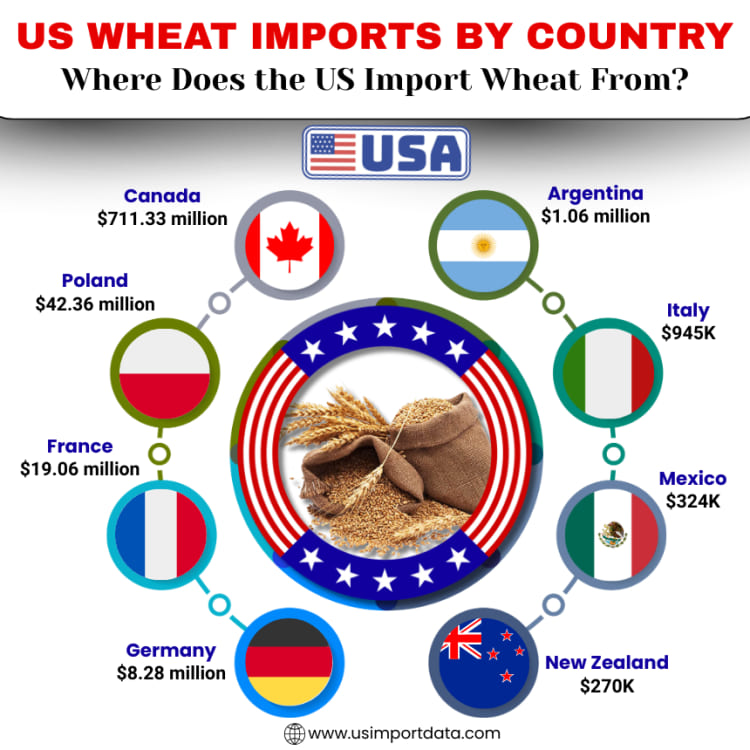
When it comes to US wheat imports by country, the United States sources wheat from various nations worldwide. Some major wheat suppliers to the US include Canada, Poland, and France. Canadian wheat, known for its high quality and diverse varieties, is a prominent choice for US imports. Poland has also emerged as a significant player in the global wheat market, providing the US with a considerable portion of its wheat imports. The top 10 wheat-supplying countries to the US, as per the US shipment data for 2024-25, include:
1. Canada: $711.33 million
Canada is the largest supplier of wheat to the United States, with over $700 million worth of wheat imported each year, as per the data on US wheat imports from Canada by HS code. The proximity of Canada to the US, as well as the high quality of Canadian wheat, makes it an attractive option for American buyers. Canadian wheat is known for its consistency and purity, making it a popular choice for bakers and food manufacturers in the US.
2. Poland: $42.36 million
Poland is another significant supplier of wheat to the United States, with over $40 million worth of wheat imported annually. Polish wheat is known for its high protein content and excellent baking qualities, making it a popular choice for bread and pastry manufacturers in the US. The relatively low cost of Polish wheat also makes it an attractive option for American buyers.
3. France: $19.06 million
France is renowned for its high-quality wheat, and the United States imports over $19 million worth of French wheat each year. French wheat is known for its superior baking qualities and distinctive flavor, making it a popular choice for artisanal bakers and pastry chefs in the US. The long history of wheat cultivation in France has resulted in a diverse range of wheat varieties, each with its unique characteristics.
4. Germany: $8.28 million
Germany is another key supplier of wheat to the United States, with over $8 million worth of wheat imported annually, as per the data on US wheat imports from Germany. German wheat is known for its high gluten content, making it ideal for making bread and other baked goods. The consistent quality of German wheat, as well as its reputation for reliability, has made it a popular choice for American buyers.
5. Argentina: $1.06 million
Argentina is a relatively small supplier of wheat to the United States, with around $1 million worth of wheat imported each year. However, Argentine wheat is known for its high protein content and excellent baking qualities, making it a popular choice for American buyers. The favorable exchange rate between the US dollar and the Argentine peso also makes Argentine wheat an attractive option for US importers.
6. Italy: $945K
Italian wheat is known for its unique flavor and excellent baking qualities, making it a popular choice for American buyers. The United States imports nearly $1 million worth of Italian wheat each year, primarily for use in specialty bread and pasta products. The high quality of Italian wheat, as well as its distinctive taste, has made it a sought-after ingredient for American chefs and food manufacturers.
7. Mexico: $324K
Mexico is a relatively small supplier of wheat to the United States, with around $324,000 worth of wheat imported annually. Mexican wheat is known for its high protein content and excellent baking qualities, making it a popular choice for American buyers. The proximity of Mexico to the US also makes it an attractive option for American importers looking to reduce shipping costs.
8. New Zealand: $270K
New Zealand is another small supplier of wheat to the United States, with around $270,000 worth of wheat imported each year. New Zealand wheat is known for its high protein content and excellent baking qualities, making it a popular choice for American buyers. The pristine growing conditions in New Zealand result in wheat that is free from contaminants, making it a safe and reliable choice for American consumers.
9. Peru: $152K
Peru is a relatively small supplier of wheat to the United States, with around $152,000 worth of wheat imported annually. However, Peruvian wheat is known for its high-quality and excellent baking qualities, making it a popular choice for American buyers. The unique flavor of Peruvian wheat, as well as its nutritional value, has made it a sought-after ingredient for American chefs and food manufacturers.
10. United Kingdom: $91K
The United Kingdom is a small supplier of wheat to the United States, with around $91,000 worth of wheat imported each year. British wheat is known for its high protein content and excellent baking qualities, making it a popular choice for American buyers. The long history of wheat cultivation in the UK has resulted in a diverse range of wheat varieties, each with its unique characteristics.
US Wheat Imports in the Last 10 Years: Historical US Wheat Import Data
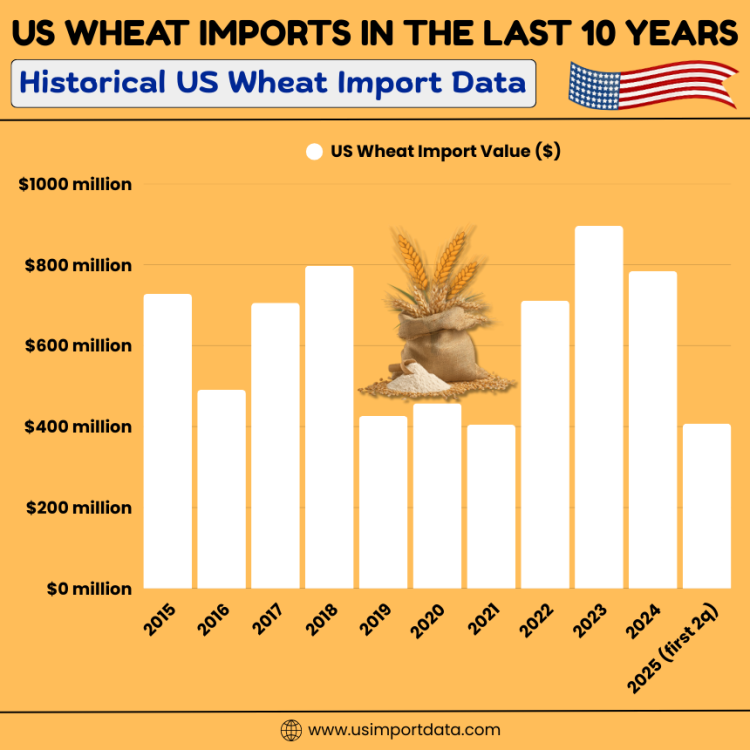
|
Year of Imports |
US Wheat Import Value ($) |
|
2015 |
$727.80 million |
|
2016 |
$491.02 million |
|
2017 |
$705.55 million |
|
2018 |
$797.30 million |
|
2019 |
$426.35 million |
|
2020 |
$457.63 million |
|
2021 |
$404.89 million |
|
2022 |
$710.96 million |
|
2023 |
$895.67 million |
|
2024 |
$784.09 million |
|
2025 (first 2 quarters) |
$407.23 million |
Longer-Term Trend: How U.S. Wheat Imports Have Evolved
To understand the 2024–25 numbers, it helps to step back and look at broader patterns.
1970s–1990s: Minimal Imports
For most of the twentieth century, the United States imported virtually no wheat. Domestic production far exceeded demand, and milling operations relied entirely on U.S.-grown grain.
2000s: The Rise of Niche Imports
By the early 2000s, imports began to rise, mostly due to specialty demand, particularly durum and high-protein spring wheat from Canada.
2010s–2020s: A Stable Pattern of 2–3 Million Tons Annually
Over the last decade, U.S. wheat imports have hovered around 2–3 million metric tons per year, counting both grain and wheat-equivalent processed goods.
Several factors contributed to this stability:
-
Preference for Canadian milling-quality wheat
-
Growth in imports of wheat flour and pasta
-
Occasional shortfalls in U.S. durum production
-
Cost advantages when Canadian prices undercut domestic supplies
By 2024, the U.S. was importing slightly less wheat by volume than in some earlier years, but the trend remained steady.
U.S. Wheat Imports by Country (2024–25)
Imports come from a mix of grain suppliers and processed product suppliers. The following breakdown reflects the dominant patterns for 2024–25.
1. Canada (by far the largest exporter to the U.S.)
Canada is the source of well over two-thirds of all U.S. wheat imports, and in some years it accounts for more than three-quarters.
The reasons are straightforward:
-
Geographical proximity reduces transport costs
-
Canadian wheat classes (especially hard red spring and durum) complement U.S. production
-
North American milling systems are integrated and sometimes share supply chains
What the U.S. imports from Canada:
-
Hard red spring wheat with very high protein
-
Durum wheat for pasta manufacturing
-
Wheat flour and semolina
-
Processed wheat foods such as pasta and dough products
Canadian durum is particularly important because U.S. durum production can fluctuate sharply from year to year. In seasons when North Dakota or Montana have weather issues, durum imports jump.
2. Poland
Poland is a much smaller supplier, but it has increased its presence. U.S. imports from Poland tend to involve:
-
Wheat flour blends
-
Certain food products made from wheat
-
Occasional shipments of grain for niche uses
These flows remain small in volume but noticeable within the diversification trend of U.S. wheat imports.
3. Mexico
Mexico supplies the U.S. with:
-
Wheat flour
-
Pasta products
-
Baking mixes and prepared dough products
These imports are often tied to regional food manufacturers operating supply chains on both sides of the border.
4. Caribbean Nations (Bahamas, Cayman Islands, Dominican Republic, Panama, Barbados)
These countries do not export wheat grain to the U.S. Instead, they export:
-
Packaged flour
-
Prepared baking ingredients
-
Manufactured wheat foods
Why? Some islands host processing facilities that specialize in repackaged consumer flours or low-cost prepared mixes. These flows are small but stable.
5. European Union
While not a major supplier, the EU sends specialized wheat products to the U.S., including:
-
Organic flour
-
High-quality pasta
-
Specialty baking products
These are value-added imports rather than bulk wheat.
What Exactly Is the U.S. Importing? Grain vs. Processed Wheat
One of the most misunderstood aspects of the US wheat trade is that “wheat imports” include a wide range of items. They fall into two large categories.
1. Raw Wheat Grain Imports
These account for roughly 1.5–2.3 million metric tons annually.
Main grain types imported:
-
Durum wheat
-
Used for pasta and couscous
-
Canada is the dominant source
-
Imported when U.S. production falls short
-
High-protein spring wheat
-
Important for bread flour
-
Imported for blending to meet protein specs
-
Niche soft wheats
-
Small volumes from Canada for pastry and cracker applications
2. Wheat Products (Converted into wheat-equivalent tons)
These include:
-
Pasta
-
Wheat flour
-
Semolina
-
Bulgur
-
Prepared mixes
-
Baked products
These imports account for the remainder, close to 1 million metric tons in wheat-equivalent terms.
Understanding this split is key: the U.S. mainly imports products, not grain, even though grain imports get more attention.
Why the US Imports Wheat from a Major Wheat-Producing Country
The U.S. grows a great deal of wheat, but not every class or quality needed by millers is always abundant. Several forces influence import decisions.
1. Domestic Supply Variability
Wheat production varies by class. For example:
-
Some years, the U.S. has strong winter wheat harvests but weak durum output.
-
Spring wheat areas may face drought while other regions thrive.
This variability leads buyers to smooth their supply with imports.
2. Milling Quality Requirements
Flour mills blend wheats by protein level, gluten strength, and dough characteristics. Mills often need:
-
Very high-protein wheat for bread
-
Specific gluten profiles for noodles
-
High-quality durum for pasta
When domestic supply doesn’t match the ideal mix, mills import the difference.
3. Cost Competitiveness
Canada often offers:
-
Lower basis prices
-
Consistent protein levels
-
Reliable rail and truck delivery
When Canadian wheat is cheaper delivered to a mill than U.S. wheat, imports rise.
4. Integrated North American Supply Chains
Many milling companies operate plants on both sides of the border. Wheat may flow in either direction depending on:
-
Harvest conditions
-
Transportation costs
-
Contract requirements
This integration is a powerful driver of stable import levels.
5. Consumer Preferences
Demand for specialty wheat products, such as Italian-style pasta or European-style flours, also supports the import of processed wheat goods.
Market Dynamics Influencing 2024–25 Imports
The 2024–25 wheat marketing year reflects both global and domestic forces.
Stronger U.S. Production Reduced Import Pressure
The 2024 U.S. wheat harvest showed improvement in several regions:
-
Higher winter wheat yields
-
Better moisture in spring wheat areas
-
More consistent durum output
This reduced the urgency for raw grain imports.
Competitive Global Wheat Prices
Global wheat prices in 2024 fell from earlier highs due to:
-
Large Russian harvests
-
Recovery in Australian production
-
Seasonal pressure in Europe
Lower world prices made some wheat classes more affordable, but the U.S. still relied mainly on Canada.
Durum Markets Remained Tight
Even with better U.S. production, durum remained one of the more volatile segments. Pasta makers continued sourcing consistent Canadian durum to ensure semolina quality.
Trade Policy Noise but No Major Wheat Tariff Changes
While U.S. trade policy discussions intensified in 2024, wheat imports were not directly impacted. Wheat tariffs remained minimal among major partners.
Strong Demand for Processed Products
Imports of wheat foods such as pasta and baked goods increased modestly, reflecting:
-
Consumer convenience preferences
-
More specialty products from Europe and Mexico
-
Growing demand for imported pasta varieties
How U.S. Imports Compare to U.S. Wheat Exports
Understanding the scale of U.S. wheat imports requires comparing them to exports.
Approximate volumes:
-
U.S. wheat imports: 3 million metric tons (grain + product equivalent)
-
U.S. wheat exports: 20–22 million metric tons (varies year to year)
This shows that:
-
Imports are roughly one-tenth of exports
-
Imports serve specialized milling and consumer niches
-
The U.S. remains a major net exporter of wheat globally
Imports do not reflect any shortage of domestic wheat; they reflect market optimization.
Outlook for 2025–26: What to Expect Next
Looking ahead, several factors will shape U.S. wheat imports.
1. Continued Dependence on Canadian Durum and Spring Wheat
Unless U.S. durum acreage expands significantly, Canada will remain an essential supplier.
2. Stable or Slightly Increasing Imports of Wheat Products
Processed wheat foods will likely see:
-
Growth tied to consumer demand
-
More niche pasta varieties
-
Increased imports of organic flour and specialty baking ingredients
3. Effects of Global Wheat Production
If Russia, Australia, or the EU sees big harvests, lower global prices could make some imported wheat more attractive.
4. U.S. Acreage Decisions
If U.S. farmers reduce durum or spring wheat acreage due to profitability concerns, imports could rise again.
Conclusion and Final Thoughts
In conclusion, U.S. wheat imports in 2024–25 illustrate a complex but consistent story. The United States is one of the world’s largest wheat producers and exporters, yet it imports wheat to:
-
Meet quality standards
-
Fill gaps in durum supply
-
Support milling blends
-
Supply consumer markets with specialty wheat foods
Canada remains the dominant wheat supplier to the US, due to its complementary wheat classes, geographic proximity, and stable pricing. Other countries, especially in Europe, Mexico, and the Caribbean, contribute mainly through processed wheat products. As global wheat markets evolve, the U.S. will continue to balance strong domestic production with strategic imports to keep food manufacturing efficient and flour quality high. Imports will remain a small slice of total U.S. wheat use, but a meaningful one for millers, bakers, and consumers who depend on consistent wheat quality year-round.
For more information on the latest US export-import data, or to search live data on US wheat imports by country, visit USImportdata. Contact info@tradeimex.in for customized trade reports, market insights, & a verified database of the top wheat importers in the USA, tailored to your business needs.
Also Read About:
What's Your Reaction?