Top US Imports 2025: Tariff Hikes and US Tariff Impact Breakdown
Discover how 2025 tariff hikes are reshaping US imports. Explore data on the top 10 US imports impacted by tariffs, price shifts, and market trends in key sectors.
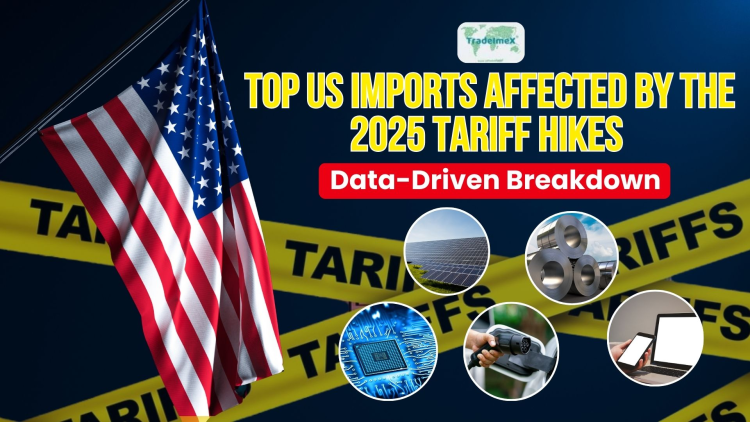
The United States has implemented various tariff hikes on imports from different countries as part of its trade policies. These tariff increases have had a significant impact on the top imports into the US market. The 2025 U.S. tariff hikes and Trump tariffs have significantly impacted various import sectors, reshaping trade dynamics and influencing market trends. According to the US import data and B/L data on US imports, the US imported goods worth $3.35 trillion in 2024, an increase of 6% from 2023, with machinery, electronics, and vehicles being the top US imports. Before the US tariff war, the US imports reached a total value of around $1 trillion in Q1 of 2025. This detailed analysis explores the top U.S. imports affected, examining tariff structures, import and pricing trends, and broader market implications. In this article, we will provide a data-driven breakdown of the top US imports affected by the 2025 tariff hikes and the tariff trade war.
The Impact of Tariff Hikes on US Imports
The imposition of tariffs on imports is a common strategy used by governments to protect domestic industries, address trade imbalances, and promote economic growth. However, tariff hikes can also lead to higher prices for consumers, supply chain disruptions, and increased trade tensions between countries. Understanding the specific imports that will be most affected by tariff hikes in 2025 is essential for businesses and policymakers alike.
Overview of 2025 Tariff Increases
In early 2025, the U.S. administration implemented extensive tariff hikes affecting a broad spectrum of imported goods:
-
China: 145% tariff on all imports (US imports from China), encompassing a 125% "reciprocal" tariff and a 20% levy linked to fentanyl-related policies.
-
Canada & Mexico: 25% tariffs on most goods, with certain USMCA-compliant products temporarily exempted.
-
Universal Tariff: A 10% base duty applied to all imported goods, excluding specific exemptions.
These measures have disrupted supply chains, increased costs for businesses and consumers, and prompted shifts in global trade patterns.
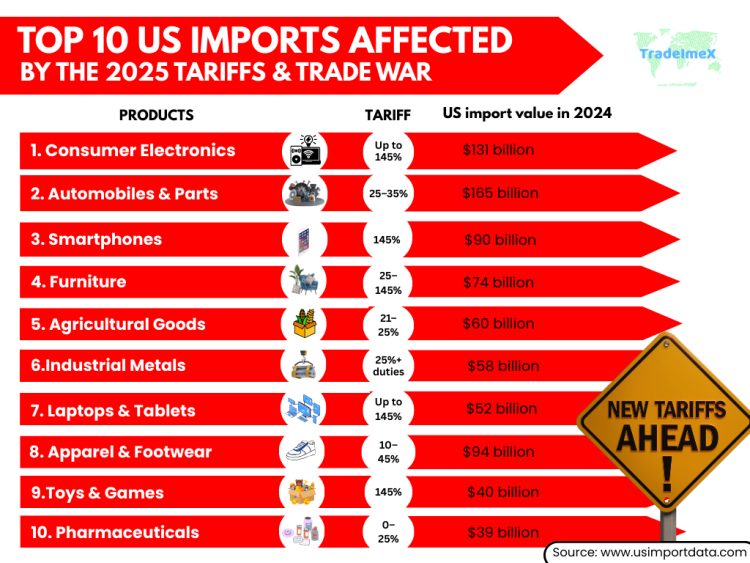
Top 10 US Imports Affected by the 2025 Tariffs & Trade War
|
Sn |
Product Category |
Main Sources |
Tariff % |
2024 Import Value (USD) |
Key Impact Summary |
|
1 |
Consumer Electronics |
China, S. Korea |
Up to 145% |
$131 billion |
Price hike (20–46%), sourcing shift to Vietnam/India |
|
2 |
Automobiles & Parts |
Mexico, Germany, Japan |
25–35% |
$165 billion |
Car prices ↑ $3,500–$15,000, EV supply hit |
|
3 |
Smartphones |
China |
145% |
$90 billion |
15% drop in volume, market scramble for alternatives |
|
4 |
Furniture |
China, Vietnam |
25–145% |
$74 billion |
Markups up 10–30%, slow restocking cycles |
|
5 |
Agricultural Goods |
Mexico, Canada |
21–25% |
$60 billion |
Food inflation: Tomato & avocado prices soar |
|
6 |
Industrial Metals |
China, Brazil, Canada |
25%+ duties |
$58 billion |
Construction & packaging cost spikes |
|
7 |
Laptops & Tablets |
China, Taiwan |
Up to 145% |
$52 billion |
Tech hardware inflation, supply chain redirection |
|
8 |
Apparel & Footwear |
China, Vietnam |
10–45% |
$94 billion |
Fast fashion hit, profit margins squeezed |
|
9 |
Toys & Games |
China |
145% |
$40 billion |
Holiday season volatility, stock shortages |
|
10 |
Pharmaceuticals |
India, China, Germany |
0–25% |
$39 billion |
Some exempt; generics volatile, supply stability threatened |
Consumer Electronics
Tariff Impact
-
Electronics such as smartphones, laptops, and tablets from China now face tariffs up to 145%.
-
Temporary exemptions were granted for certain consumer electronics, but these are subject to change, contributing to market uncertainty.
Import & Pricing Trends
-
Smartphone imports declined by 15.27% in the first 10 months of 2023 compared to the same period in 2022.
-
The cost of importing consumer electronics from China is projected to increase by $61 billion due to the new tariffs.
Market Implications
-
Consumers may face price increases of up to 26% for smartphones and 46% for laptops and tablets.
-
Retailers and manufacturers are exploring alternative sourcing from countries like Vietnam and India, though challenges such as quality consistency and supply chain integration persist.
Automotive Sector
Tariff Impact:
-
A 25% tariff has been imposed on automobiles and auto parts, affecting imports from China, Mexico, and Canada.
Import & Pricing Trends:
-
Consumers are experiencing price increases ranging from $3,500 to $15,000 for new vehicles.
-
Automakers are temporarily absorbing some costs, but sustained tariffs may lead to higher vehicle prices in the long term.
Market Implications:
-
The automotive industry is reassessing supply chains, with considerations for reshoring and diversifying sourcing to mitigate tariff impacts.
Furniture and Household Goods
Tariff Impact:
-
Furniture and household items imported from China are now subject to tariffs up to 145%, which can affect US furniture import data.
Import & Pricing Trends:
-
The increased tariffs have led to higher costs for furniture, kitchenware, and daily necessities, prompting consumers to seek alternatives or delay purchases.
Market Implications:
-
Retailers are exploring sourcing from other countries, but challenges such as increased logistics costs and longer lead times are considerations.
Food and Agricultural Products
Tariff Impact:
-
A 21% antidumping duty has been imposed on Mexican tomatoes, effective July 14, 2025.
-
Chinese food imports, including canned fruits, vegetables, and condiments, face tariffs up to 145%.
Import & Pricing Trends:
-
Consumers are engaging in "doom-buying," stockpiling items like coffee, olive oil, and soap in anticipation of price hikes.
-
Retail data indicates sharp increases in sales of pantry staples following tariff announcements.
Market Implications:
-
The food industry is facing increased costs, which may be passed on to consumers, leading to higher grocery bills.
Industrial Supplies and Metals
Tariff Impact:
-
Steel and aluminum products are subject to a 25% tariff, with additional levies on specific items like canned beer and empty aluminum cans.
Import & Pricing Trends:
-
Imports of industrial supplies, including finished metals, increased by $10.8 billion as firms anticipated tariff implementations.
-
Steel and aluminum prices have already risen, contributing to inflationary pressures.
Market Implications
Manufacturers may face increased production costs, potentially leading to higher end-consumer prices and adjustments in sourcing strategies.
Broader Market Trends and Trade Dynamics
Trade Deficit: The U.S. trade deficit widened to $98.4 billion in December 2024, a 24.7% increase from November, as firms accelerated imports ahead of anticipated tariffs.
Tariff Policy Summary
|
Policy Category |
Details |
|
Universal Tariff |
10% on all imports (excluding specific exemptions) |
|
China Tariff |
145% (125% retaliatory + 20% fentanyl-linked surcharge) |
|
Canada/Mexico Tariff |
25% on most imports (some USMCA-exempt items) |
|
Anti-Dumping Duties |
Up to 21% (e.g., tomatoes, steel) |
|
Effective From |
January 2025 |
Market Trends & Reactions
-
Imports Dropping:
-
Smartphones: down by 15.27%
-
Furniture: down by 12.8%
-
Apparel: down by 8.2%
-
Retail Markups:
-
Tech: +20–40%
-
Furniture & Auto: +10–30%
-
Food: +8–15%
-
Supply Chain Realignment:
-
Companies shifting to Vietnam, India, Malaysia
-
Rise in warehousing & pre-import stockpiling (esp. in Q1 2025)
Year-over-Year Import Drop (Selected Sectors)
|
Sector |
% Drop in Import Volumes (YTD 2025 vs. 2024) |
|
Smartphones & Laptops |
-15.27% |
|
Furniture |
-12.8% |
|
Automobiles |
-10.4% |
|
Apparel & Footwear |
-8.2% |
|
Agricultural Products |
-6.7% |
Global & Strategic Implications
-
WTO Tensions: China and others challenge U.S. tariffs. China has filed WTO complaints in response to the 145% tariff hikes.
-
USMCA Friction: Canada & Mexico request consultations. Mexico & Canada have called for USMCA arbitration over unilateral tariff increases.
-
Friend-shoring Surge: Sourcing diversifies to geopolitical allies. Analysts expect a rebalancing of global trade routes, especially across Asia-Pacific and LATAM.
Trade Deficit Impact
|
Month |
U.S. Trade Deficit |
% Change (MoM) |
|
Dec 2024 |
$98.4 billion |
+24.7% |
|
Jan–Mar 2025 |
Sustained ↑ |
Driven by pre-tariff stockpiling |
Expert Outlook
-
Short-term (2025-2026)
-
Consumer inflation, retailer cost pass-through, sourcing scramble
-
Continued inflationary pressure.
-
Increase in gray-market and parallel imports.
-
Retailers will likely pass on 60–80% of tariff costs to consumers.
-
Long-Term (2026 and beyond)
-
Growth in domestic production, potential for renegotiated trade terms
-
Potential for renewed trade agreements or tariff easing if inflation spikes.
-
Reshoring and automation to gain U.S. manufacturing resilience.
The Future of US Imports
As the 2025 tariff hikes continue to have an impact on the top US imports, businesses and consumers are left to navigate a rapidly changing trade environment. Companies must diversify their supply chains and explore alternative sourcing options to mitigate the effects of these tariff increases. Governments and trade organizations are also working towards finding solutions to reduce trade tensions and create a more stable and predictable trade environment.
Possible technology & automobile exemptions under scrutiny as Trump creates uncertainty
President Trump asserted that tariffs will soon apply to phones, computers, and major consumer electronic items, while investors shift their attention to products and companies that might receive at least temporary exemptions. This past weekend, it became known that the US had excluded smartphones, computers, and different consumer electronics from tariffs. This revelation caused Trump and his senior advisers to create confusion. However, in an extensive Sunday social media post, Trump stated that those products were "no exception."
US Tariffs affecting millions of Chinese workers
Due to the US-China trade war, an economic slowdown is hitting Chinese workers the hardest. The repercussions are nationwide, as the labor market, already fragile, was hit by unpredictable retaliatory tariffs that began in early 2025. With an industry forecast that up to 20 million people or roughly 3% of the labor workforce may be prone to US-bound exports, Trump’s 145% tariffs on Chinese goods are endangering its access to the world’s largest economy. An economic divorce would disrupt a workforce that has already been depleted by layoffs and widespread salary reductions.
Key Takeaways
-
Tariffs are changing cost structures across electronics, autos, agriculture, and more.
-
Supply chains are shifting toward Vietnam, India, and LATAM due to China-centric tariffs.
-
Import volumes are falling, and prices are rising—faster than many predicted.
-
Strategic adaptation is vital: cost modeling, source diversification, and inventory management are no longer optional.
Conclusion
In conclusion, the 2025 tariff hikes have had a significant impact on the top US imports across various sectors. Businesses need to adapt to these changes and find ways to navigate the evolving trade landscape. From smartphones to steel, businesses across the spectrum are grappling with rising costs, volatile supply chains, and the urgent need for strategic adaptation.
Hence, we conclude that the 2025 US tariff hikes mark more than just a shift in trade policy—they signal a shift in global sourcing, pricing dynamics, and market competitiveness. We hope that you liked our blog report on the top 10 US imports impacted by the tariff hikes in 2025. For more such insights into the US import-export data, shipment data, and trade trends, visit USImportdata. Contact us at info@tradeimex.in to get a list of the top US import companies today!
What's Your Reaction?