US Wood Import Data 2025: US Wood Importers Database & Wood Imports by Country
Explore US Wood Import Data 2025 with a comprehensive US wood importers database and insights into wood imports by country. Find verified buyers, suppliers, shipment trends, HS codes, and global trade opportunities in the US wood industry.

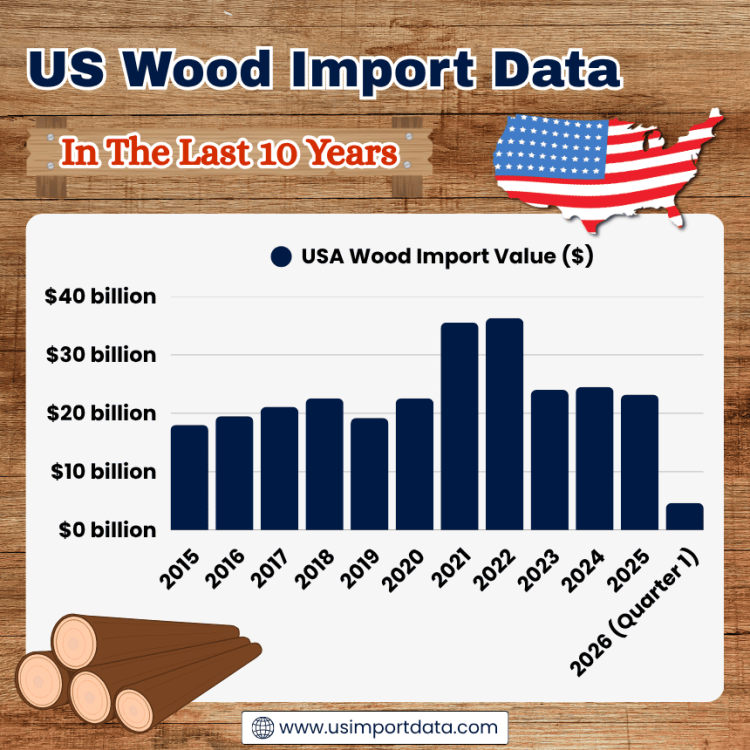
The United States remains one of the world’s largest importers of wood, lumber, plywood, timber, and related forest products. In 2025, the market continued to evolve under the pressure of housing demand, infrastructure spending, supply chain shifts, environmental regulations, and changing tariff policies. According to the US import data, the total value of US wood imports reached $23.20 billion in 2025, a 5% decline from the previous year. According to the latest wood import data of the USA, the US imported $4.62 billion worth of wood in the first quarter of 2026.
The USA is the largest importer of wood in the world, according to global trade data and US wood import data under HS code 44. For global exporters, manufacturers, sourcing companies, and trade analysts, understanding US wood import data is no longer optional. It is a critical part of identifying buyers, tracking competitors, evaluating sourcing risks, and finding profitable export opportunities. According to recent trade reports, the US imported billions of dollars' worth of lumber, plywood, hardwood products, and processed wood materials in 2025. Canada remained the dominant supplier in softwood lumber, while Brazil, Vietnam, Indonesia, China, Germany, and several Southeast Asian countries expanded their share in value-added wood products.
This article explores:
-
The size of the US wood import market in 2025
-
Top wood-importing sectors in America
-
Major supplier countries
-
Key US wood importers and buyers
-
HS codes used in the wood trade
-
Emerging trends shaping the wood import industry
-
How businesses use US wood importers databases for lead generation and market intelligence
Overview of the US Wood Import Market in 2025
The US construction and furniture industries continue to rely heavily on imported wood products. Domestic production alone cannot fully satisfy demand, especially in housing construction, renovation, flooring, cabinetry, packaging, and industrial manufacturing. Recent trade reports show that US lumber imports reached around $7.44 billion in 2025, with import volumes crossing 30 million cubic meters.
The broader wood products market includes:
-
Softwood lumber
-
Hardwood timber
-
Plywood
-
MDF and particle boards
-
Veneers
-
Flooring panels
-
Wooden furniture components
-
Engineered wood products
-
Tropical hardwoods
The market remains deeply connected to:
-
Residential housing starts
-
Commercial construction
-
Remodeling activity
-
Furniture manufacturing
-
DIY retail demand
-
Infrastructure spending
As mortgage rates stabilized in parts of 2025 and renovation activity remained strong, imports of several wood categories recovered despite ongoing trade uncertainties.
US Wood Imports by Country: Where Does the US Import Wood From?
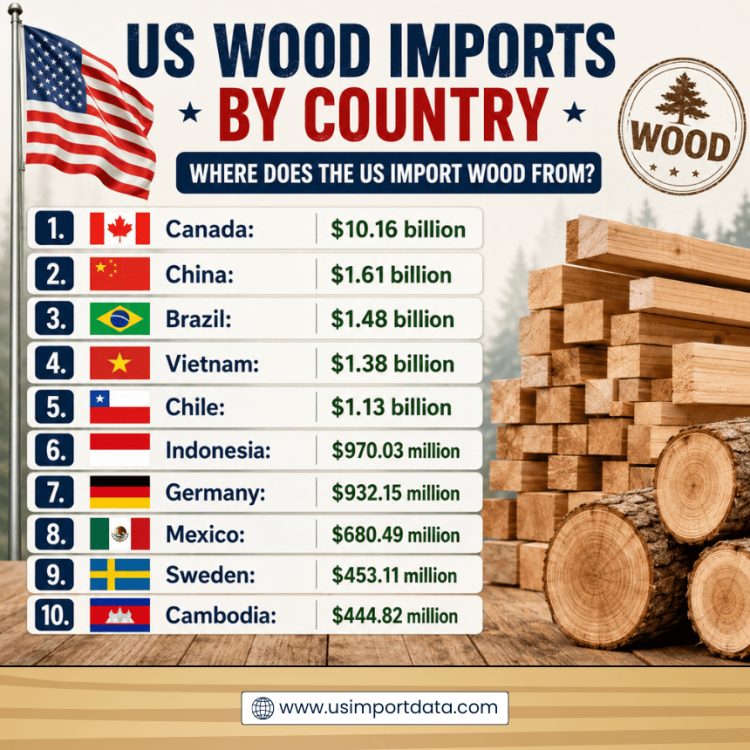
When it comes to wood imports, the United States relies on various countries to meet its demand for timber products. The US is one of the largest consumers of wood in the world, with a significant portion of its wood supply coming from overseas. Now the question arises, where does the US get wood from? US wood imports by country vary, with the United States sourcing wood from various nations. Canada stands out as the largest supplier of wood to the US, providing an array of softwood and hardwood options.
Other significant wood-importing countries for the US include China, Brazil, and Vietnam. Each of these countries offers unique types of wood, contributing to the diverse selection available in the US market. The top 10 wood supplier countries to the USA, as per the US wood shipment data for 2025, include:
1. Canada: $10.16 billion (43.8%)
Canada is the largest supplier of wood to the United States, accounting for a significant portion of the wood imports, as per the data on US imports from Canada by HS code 44. With its vast forests and well-established timber industry, Canada provides a wide range of wood products to meet the diverse needs of the US market. From softwood lumber to hardwood flooring, Canada is a reliable source of high-quality wood products for the US construction and manufacturing sectors. However, the US-Canada lumber trade remained affected by tariff disputes and anti-dumping duties in 2025. Trade tensions intensified further after discussions around additional wood-product tariffs under Section 232 investigations.
2. China: $1.61 billion (6.9%)
China is another major exporter of wood products to the United States. While not as significant as Canada, China plays a crucial role in supplying certain types of wood products that are in demand in the US market, as per the data on US wood imports from China. From furniture to decorative wood items, China offers a range of wood products that cater to the tastes of American consumers. However, imports from China declined in several categories during 2025 as US buyers shifted toward Southeast Asia and Latin America.
3. Brazil: $1.48 billion (6.4%)
Brazil is known for its rich rainforests and diverse wood species, making it a valued source of exotic wood products for the US market. Brazilian wood is prized for its unique grain patterns and durability, making it a popular choice for flooring, furniture, and decking. Despite concerns about deforestation, Brazil continues to be a key supplier of wood products to the United States.
4. Vietnam: $1.38 billion (6%)
Vietnam has emerged as a growing player in the global wood market, with a significant share of its wood products destined for the United States. With its competitive pricing and quality wood products, Vietnam has become a preferred source of wood for US importers. From plywood to wood furniture, Vietnam offers a range of wood products that appeal to US consumers.
5. Chile: $1.13 billion (4.9%)
Chile is another important supplier of wood products to the United States, particularly softwood products such as pine and cedar. With its sustainable forestry practices and high-quality wood products, Chile has established itself as a reliable source of wood for the US market. The proximity of Chile to the US also makes it an attractive option for reducing transportation costs.
6. Indonesia: $970.03 million (4.2%)
Indonesia is renowned for its teak and mahogany wood products, which are highly sought after in the US market for their durability and beauty. Indonesia's tropical forests are a valuable source of exotic wood species that are used in high-end furniture, flooring, and construction projects in the United States. Despite concerns about illegal logging, Indonesia remains a significant supplier of wood products to the US.
7. Germany: $932.15 million (4%)
Germany is a major exporter of wood products to the United States, with a focus on high-quality engineered wood products such as plywood and particleboard. German wood products are known for their precision engineering and sustainable production practices, making them popular choices for US manufacturers and builders. Germany's reputation for quality and innovation has helped it establish a strong presence in the US wood market.
8. Mexico: $680.49 million (2.9%)
Mexico is a key supplier of wood products to the United States, particularly softwood lumber products such as pine and fir. With its proximity to the US market and competitive pricing, Mexico offers a convenient source of wood products for American consumers. Mexico's well-developed timber industry and trade relationship with the US make it a reliable partner for meeting the wood demand in the United States.
9. Sweden: $453.11 million (2%)
Sweden is known for its sustainable forestry practices and high-quality wood products, making it a respected supplier of wood to the United States. Swedish wood products, such as spruce and pine lumber, are valued for their quality and durability, making them popular choices for construction and woodworking projects in the US. Sweden's commitment to sustainable forestry management has helped it maintain a strong presence in the US wood market.
10. Cambodia: $444.82 million (1.9%)
Cambodia is a relatively small but emerging player in the US wood market, with a growing share of its wood products being imported by the United States. Cambodian wood products, such as teak and rosewood, are prized for their unique grain patterns and rich colors, making them popular choices for high-end furniture and decorative items in the US market. Cambodia's expanding timber industry and increasing exports to the US reflect its rising importance as a wood supplier.
US Wood Importers Database: Top Wood Buyers in the USA With Shipment Records
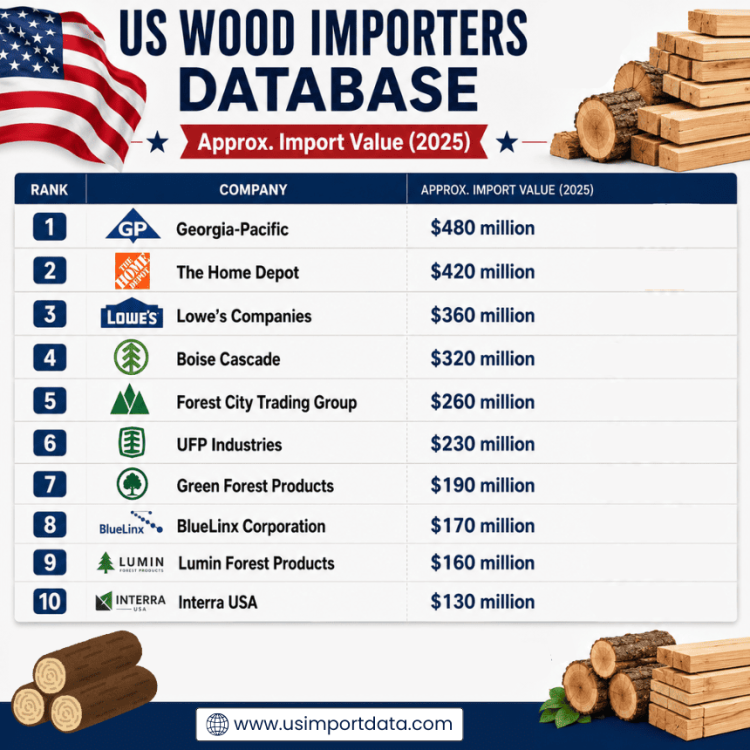
The US wood import market includes thousands of active buyers across multiple industries. The US wood importers database helps businesses to find the top importers of wood in the American wood market. Georgia-Pacific is the largest wood importer in the US. The leading wood importers in the USA, as per the US wood buyers & importers database for 2025, include:
1. Georgia-Pacific
-
Approx. Import Value (2025): $480 million
-
Top Imported Types: Softwood plywood, structural plywood, engineered wood
-
Top Import Sources: Brazil, Canada, Chile
2. The Home Depot
-
Approx. Import Value (2025): $420 million
-
Top Imported Types: Hardwood plywood, cabinet-grade plywood, MDF
-
Top Import Sources: Vietnam, Indonesia, China
3. Lowe’s Companies
-
Approx. Import Value (2025): $360 million
-
Top Imported Types: Hardwood plywood, marine plywood, decorative panels
-
Top Import Sources: Vietnam, Malaysia, Canada
4. Boise Cascade
-
Approx. Import Value (2025): $320 million
-
Top Imported Types: Structural plywood, LVL panels, engineered wood
-
Top Import Sources: Canada, Brazil, Chile
5. Forest City Trading Group
-
Approx. Import Value (2025): $260 million
-
Top Imported Types: Veneer plywood, hardwood plywood, sawn timber
-
Top Import Sources: Indonesia, Vietnam, China
6. UFP Industries
-
Approx. Import Value (2025): $230 million
-
Top Imported Types: CDX plywood, softwood panels, industrial lumber
-
Top Import Sources: Brazil, Mexico, Chile
7. Green Forest Products
-
Approx. Import Value (2025): $190 million
- Top Imported Types: Decorative plywood, hardwood plywood, veneer panels
-
Top Import Sources: Vietnam, Indonesia, China
8. BlueLinx Corporation
-
Approx. Import Value (2025): $170 million
-
Top Imported Types: Construction plywood, softwood plywood, industrial wood
-
Top Import Sources: Canada, Brazil, Chile
9. Lumin Forest Products
-
Approx. Import Value (2025): $160 million
-
Top Imported Types: Structural plywood, pine plywood, softwood lumber
-
Top Import Sources: Uruguay, Brazil, Chile
10. Interra USA
-
Approx. Import Value (2025): $130 million
-
Top Imported Types: Commercial plywood, hardwood plywood, general wood
-
Top Import Sources: Vietnam, China, Malaysia
Main Categories of Importers
1. Construction Material Companies
Large building suppliers import framing lumber, plywood, and engineered wood products for residential and commercial projects.
2. Furniture Manufacturers
Furniture companies import:
-
Hardwood panels
-
Veneers
-
MDF
-
Semi-finished furniture parts
3. Flooring Companies
Flooring importers source:
-
Hardwood flooring
-
Bamboo flooring
-
Engineered wood panels
4. Retail Chains
Major retailers import finished wood products and DIY construction materials.
5. Packaging Manufacturers
Wood pallets, crates, and industrial packaging materials remain significant import categories.
What a US Wood Importers Database Includes
A professional US wood importers database helps exporters identify active buyers in the American market. Typical database fields include:
|
Data Field |
Description |
|
Importer Name |
Buyer company |
|
HS Code |
Product category (HS 44) |
|
Shipment Volume |
Quantity imported |
|
Supplier Country |
Export origin |
|
Port of Entry |
US receiving port |
|
Shipment Frequency |
Monthly or yearly imports |
|
Product Description |
Detailed wood product info |
|
Consignee Details |
Buyer data |
Exporters use this information to:
-
Find verified buyers
-
Analyze competitor activity
-
Track sourcing trends
-
Build B2B sales pipelines
-
Identify high-volume importers
US Wood Import Data in The Last 10 Years
|
Year of Imports |
USA Wood Import Value ($) |
|
2015 |
$18.01 billion |
|
2016 |
$19.51 billion |
|
2017 |
$21.09 billion |
|
2018 |
$22.57 billion |
|
2019 |
$19.20 billion |
|
2020 |
$22.57 billion |
|
2021 |
$35.52 billion |
|
2022 |
$36.28 billion |
|
2023 |
$24.01 billion |
|
2024 |
$24.51 billion |
|
2025 |
$23.20 billion |
|
2026 (Quarter 1) |
$4.62 billion |

Why the US Imports So Much Wood
The global timber industry continues to expand as businesses track Wood production by country and analyze changing trade flows across international markets. Many exporters and suppliers want to know how much wood does the US import each year, especially as demand for lumber, plywood, and engineered wood products continues to rise. The United States remains a major plywood importer, with growing demand for companies that import birch plywood and other hardwood panels from Asia, Europe, and South America. A detailed List of US wood imports helps manufacturers, traders, and sourcing companies understand market trends, identify the top wood-importing countries, and evaluate opportunities in the expanding USA wood import sector.
As global demand grows, businesses involved in US import wood activities increasingly rely on trade databases and import-export intelligence for strategic decision-making. The United States has substantial forest resources, yet imports remain essential for several reasons:
1. Construction Demand
The US housing market consumes massive quantities of framing lumber, plywood, and engineered wood. Domestic mills often cannot meet seasonal surges in demand.
2. Cost Advantages
Countries like Brazil, Vietnam, Indonesia, and China frequently produce processed wood products at lower manufacturing costs.
3. Specialized Wood Species
Tropical hardwoods, exotic veneers, teak, mahogany, ipe, and specialty hardwoods are primarily sourced internationally.
4. Supply Chain Diversification
Many US importers now diversify sourcing across multiple countries after experiencing disruptions during previous supply chain crises.
5. Furniture & Interior Manufacturing
Cabinetry, flooring, and furniture manufacturers increasingly import semi-finished wood products to reduce production costs.
Major Wood Products Imported by the United States
The US imports a broad range of wood and timber products under several HS codes.
Key HS Codes in US Wood Imports
|
HS Code |
Product Description |
|
4407 |
Wood sawn or chipped lengthwise |
|
4412 |
Plywood, veneered panels |
|
4403 |
Rough wood in logs |
|
4408 |
Veneer sheets |
|
4418 |
Builders’ joinery and carpentry |
|
4411 |
Fiberboard and MDF |
|
9403 |
Wooden furniture |
Among these, HS Code 4407 remains one of the largest categories in global lumber trade.
Largest US Ports for Wood Imports
Wood imports enter the US through major seaports and land-border crossings.
Key Import Gateways
|
Port |
Main Products |
|
Los Angeles |
Furniture, plywood |
|
Long Beach |
Processed wood products |
|
Savannah |
Tropical hardwoods |
|
Houston |
Timber and industrial wood |
|
Seattle |
Canadian lumber |
|
Buffalo |
Cross-border Canadian shipments |
West Coast ports dominate Asian wood imports, while northern border crossings handle much of the Canadian lumber trade.
Impact of Tariffs on US Wood Imports
Tariffs became one of the biggest market influences in 2025. The US government expanded investigations into imported timber and wood products under national security provisions. Several policy developments affected importers:
-
Proposed 10% tariffs on lumber imports
-
Higher duties on cabinets and wood furniture
-
Continued softwood lumber disputes with Canada
-
Increased anti-dumping reviews
Industry groups warned these tariffs could increase construction costs and housing prices. At the same time, domestic producers supported stronger protections against low-cost imports.
Sustainability and Certified Timber Demand
Sustainability is becoming a central issue in the global wood trade. US buyers increasingly demand:
-
FSC-certified wood
-
PEFC-certified timber
-
Legally sourced hardwoods
-
Low-carbon supply chains
Large retailers and construction firms now require suppliers to prove:
-
Legal harvesting
-
Sustainable forestry practices
-
Environmental compliance
This trend is reshaping sourcing decisions across the global wood industry.
Fastest-Growing Segments in US Wood Imports
Several categories experienced strong growth in 2025.
1. Hardwood Plywood
Imports rose sharply as demand for housing renovations and cabinetry recovered. Hardwood plywood imports reportedly increased by nearly 19% during the year.
2. Tropical Hardwood
Luxury construction and outdoor decking increased demand for premium tropical wood species.
3. Engineered Wood
Builders increasingly use engineered wood for:
-
Energy efficiency
-
Structural consistency
-
Faster construction timelines
4. Value-Added Wood Products
Semi-finished and finished products continue replacing raw lumber imports in many sectors.
Challenges Facing the US Wood Import Market
Despite growth opportunities, the industry faces several risks.
1. Supply Chain Volatility
Global trade disruptions continue affecting shipping timelines and freight rates.
2. Environmental Regulations
Stricter environmental rules may limit timber harvesting in some regions.
3. Trade Tensions
Tariff disputes create uncertainty for long-term sourcing contracts.
4. Inflation and Housing Slowdowns
Any slowdown in construction activity directly affects wood demand.
5. Illegal Logging Concerns
Importers face increasing scrutiny regarding sourcing transparency and legality.
Opportunities for Global Exporters
The US remains one of the most attractive destinations for wood exporters worldwide.
Key opportunities include:
-
Sustainable timber exports
-
Tropical hardwoods
-
Engineered wood products
-
Hardwood plywood
-
Decorative veneers
-
Furniture-grade wood materials
Exporters that provide:
-
Consistent quality
-
Reliable trade
-
Certification compliance
-
Competitive pricing
are best positioned to expand in the US market.
Why Businesses Use US Wood Import Data
Import-export data has become a strategic business tool. Companies use US wood import data to:
1. Identify Active Buyers
Find importers already purchasing similar wood products.
2. Monitor Competitors
Track where competitors source products and which suppliers they use.
3. Analyze Market Demand
Understand which wood categories are growing fastest.
4. Build Sales Strategies
Prioritize high-volume importers and profitable markets.
5. Reduce Risk
Verify whether buyers consistently import products before approaching them.
Future Outlook for US Wood Imports
The long-term outlook for US wood imports remains positive despite short-term volatility.
Several factors will continue supporting demand:
-
Housing shortages
-
Infrastructure investment
-
Remodeling activity
-
Population growth
-
Commercial construction
-
Furniture demand
However, the market is expected to become more competitive and more regulated. Key trends likely to shape the future include:
-
Greater sourcing diversification
-
Increased sustainability requirements
-
More tariff-driven market shifts
-
Growth in engineered wood products
-
Stronger digital trade intelligence adoption
Countries that combine cost efficiency with sustainability compliance will likely gain the greatest advantage in the US market.
Conclusion and Final Thoughts
In conclusion, the US wood import market in 2025 remains one of the most important segments of global forest-product trade. Imports continue to play a crucial role in supporting construction, furniture manufacturing, flooring production, and infrastructure development across the United States. Canada continues to dominate softwood lumber exports, while Brazil, Vietnam, Indonesia, China, and European suppliers expand their influence in specialized and value-added wood products. At the same time, tariffs, sustainability concerns, and supply chain diversification are reshaping global sourcing strategies.
For exporters, manufacturers, sourcing agents, and analysts, access to accurate US wood importers databases and customs trade intelligence has become essential for identifying opportunities and staying competitive in a rapidly evolving market. As global trade conditions continue changing, companies that rely on real-time import data, diversified sourcing, and sustainable supply chains will be in the strongest position to succeed in the US wood industry.
Note For Our Readers
We hope this blog on US wood import data for 2025, the evolving US wood industry, and the US wood importers database helps you better understand the latest market trends, sourcing patterns, and global timber trade dynamics. As the United States remains one of the world’s largest importers of lumber, plywood, hardwood, engineered wood, and related forest products, access to accurate and up-to-date trade intelligence has become increasingly important for exporters, manufacturers, suppliers, importers, distributors, and construction businesses worldwide.
If you’re looking for deeper insights, customized US export-import data, or want to explore live US wood import data by country or HS code, feel free to connect with USImportdata. We provide comprehensive and updated US trade databases designed to support market research, lead generation, competitor analysis, and global business expansion. For exclusive access or customized trade data solutions, contact us at info@tradeimex.in and make smarter business decisions with confidence.
What's Your Reaction?