Zimbabwe's Bold Move to Suspend Tariffs on US Imports: US-Zimbabwe Bilateral Trade
Zimbabwe suspends tariffs on US imports in a bold trade policy shift. Explore the impact on US-Zimbabwe bilateral trade, top imports, export data, and future trade prospects.
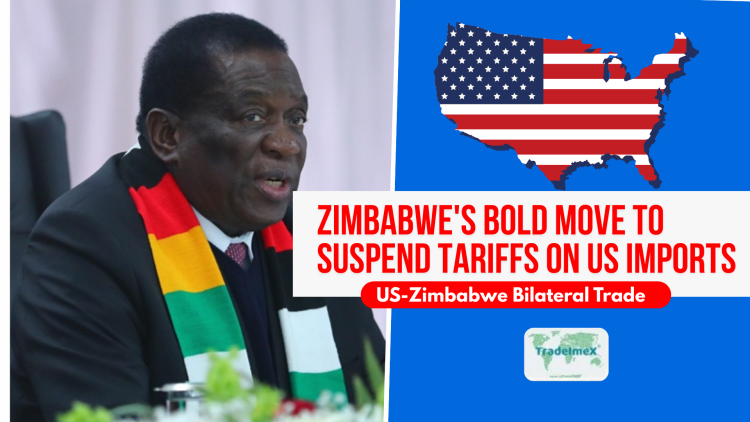
Zimbabwe recently made a bold move by suspending tariffs on US imports, signaling a new chapter in the US-Zimbabwe bilateral trade relationship. This unprecedented decision has sparked discussions and speculation on the potential impact it will have on both countries. In reaction to the latest American tariffs on Zimbabwe, President Emmerson Mnangagwa of Zimbabwe declared a halt to all US goods tariffs. This decision is intended to enhance American imports from Zimbabwe and encourage Zimbabwean exports to the US, but it could impact regional relations within the SADC. The country, which is abundant in minerals, has the United Arab Emirates, South Africa, and China as its primary trading partners.
Zimbabwe’s exports to the US are limited and consist mainly of tobacco and sugar. According to data from the US government, the total value of goods traded between the two nations reached $111.6 million in 2024. According to the US import data and trade data on US imports, the total value of US imports from Zimbabwe reached $69.53 million in 2024, a 14% decline from the previous year. The US goods imports from Zimbabwe accounted for $18.6 million in the first two months of 2025, as per the Zimbabwe customs export data. In this article, we will delve deeper into the implications of this move and what it means for the future of trade between the US and Zimbabwe.
Background of US-Zimbabwe Bilateral Trade
The United States and Zimbabwe have a long history of trade relations, with the US being one of Zimbabwe's major trading partners. Over the years, the two countries have engaged in various trade agreements and partnerships, promoting economic growth and development in both nations. Since the early 2000s, the connections between Zimbabwe and the US have been characterized by long-term pressure campaigns targeting former leader Robert Mugabe.
The Zimbabwean capital has routinely attributed the nation’s two-decade-plus economic turmoil to American sanctions. In light of this situation, it has distanced itself from Western powers while bolstering its economic relationships with China and the UAE. In recent years, however, trade tensions have escalated between the US and Zimbabwe, leading to the imposition of tariffs on various goods and services. These tariffs have hurt the trade relationship between the two countries, hindering the smooth flow of goods and services across borders.
Zimbabwe's Surprising Move to Suspend Tariffs
The decision to suspend tariffs on US imports came as a surprise to many, including trade experts and policymakers. This move is seen as a bold step by Zimbabwe to improve its trade relations with the US and create new opportunities for mutual benefit.
By suspending tariffs on US imports, Zimbabwe is signaling its willingness to enhance cooperation and strengthen economic ties with the United States. This action is expected to pave the way for increased trade and investment between the two countries, leading to economic growth and prosperity for both nations.
List of Top Products that the US Imports from Zimbabwe
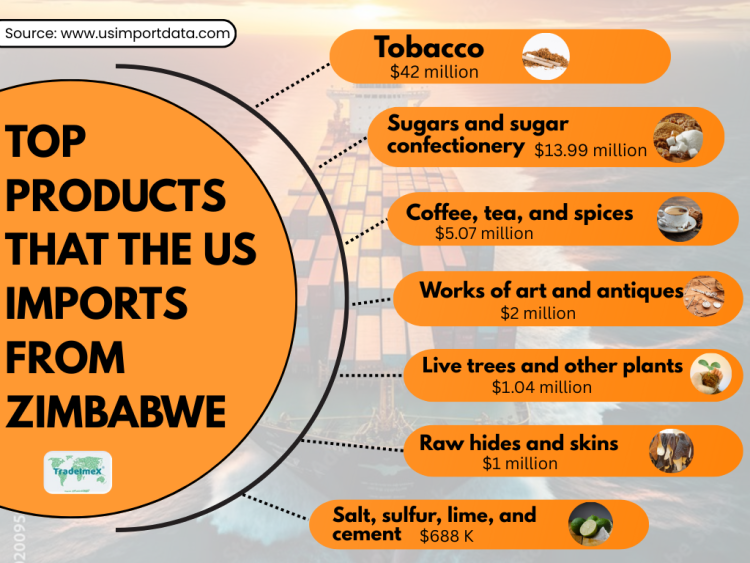
The list of top products that the US imports from Zimbabwe includes minerals such as platinum, tobacco, and precious stones like diamonds. These products play a significant role in the trade relationship between the two countries, showcasing the value of Zimbabwe's rich natural resources in the global market. The top 10 goods that the US imports from Zimbabwe, as per the US import shipment data and US-Zimbabwe trade data for 2024, include:
1. Tobacco (HS code 24): $42 million
Tobacco is one of the major exports from Zimbabwe to the United States, with a total value of $42 million in 2024. Tobacco is the biggest commodity that the US imports from this African nation. Zimbabwe is known for producing high-quality tobacco, which is in demand in the US market.
2. Sugars and sugar confectionery (HS code 17): $13.99 million
Sugars and sugar confectionery are another significant import category from Zimbabwe, with a total value of $13.99 million. These products are used in various food and beverage industries in the United States.
3. Coffee, tea, and spices (HS code 09): $5.07 million
Coffee, tea, and spices are popular commodities imported from Zimbabwe, totaling $5.07 million in 2024. Zimbabwe's coffee and tea are highly regarded for their quality and flavor.
4. Works of art and antiques (HS code 97): $2 million
Works of art and antiques made up $2 million of imports from Zimbabwe in 2024. Zimbabwe is known for its rich cultural heritage, reflected in the art and antiques produced in the country.
5. Live trees and other plants (HS code 06): $1.04 million
Live trees and other plants were imported to the United States from Zimbabwe, with a total value of $1.04 million in 2024. These products are used in the landscaping and gardening industries.
6. Raw hides and skins (HS code 41): $1 million
Raw hides and skins are essential imports from Zimbabwe, totaling $1 million in 2024. These materials are used in the manufacture of leather products in the United States.
7. Salt, sulfur, lime, and cement (HS code 25): $688K
Salt, sulfur, lime, and cement were imported from Zimbabwe, with a total value of $688K in 2024. These products have various industrial applications in the US market.
8. Printed books and newspapers (HS code 49): $446K
Printed books and newspapers from Zimbabwe accounted for $446K of imports in 2024. These items play a crucial role in disseminating information and knowledge.
9. Toys, games, and sports requisites (HS code 95): $436K
Toys, games, and sports requisites were imported from Zimbabwe, totaling $436K in 2024. These products are popular among consumers of all ages in the United States.
10. Precious stones and metals (HS code 71): $427K
Precious stones and metals from Zimbabwe had a total import value of $427K in 2024. These products are used in the jewelry and luxury goods industries in the United States.
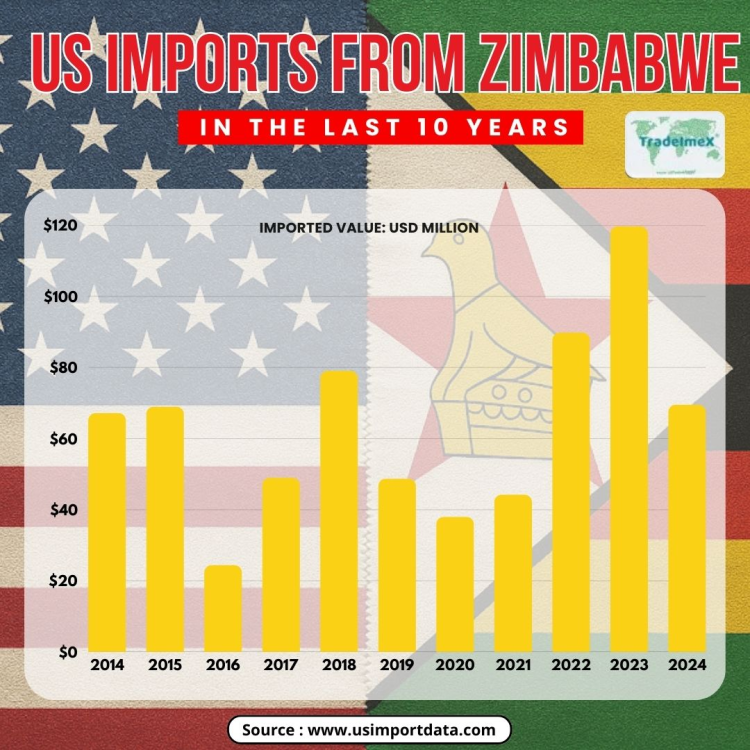
US Imports from Zimbabwe in the Last 10 Years: Yearly US Import Data by Country
|
Year of Trade |
US total imports from Zimbabwe ($) |
|
2014 |
$67.17 million |
|
2015 |
$69 million |
|
2016 |
$24.42 million |
|
2017 |
$48.98 million |
|
2018 |
$79.06 million |
|
2019 |
$48.74 million |
|
2020 |
$37.99 million |
|
2021 |
$44.24 million |
|
2022 |
$89.77 million |
|
2023 |
$119.69 million |
|
2024 |
$69.53 million |
Potential Benefits for Zimbabwe
The suspension of tariffs on US imports is expected to bring several benefits to Zimbabwe, including:
-
Boosting Trade Volume: By removing trade barriers, Zimbabwe can expect an increase in the volume of imports from the US. This will result in a more diversified range of goods and services available to Zimbabwean consumers, leading to greater choice and competition in the market.
-
Stimulating Economic Growth: Increased trade with the US will stimulate economic growth in Zimbabwe, creating new opportunities for job creation and investment. This will help to alleviate poverty and improve the standard of living for Zimbabwean citizens.
-
Enhancing Diplomatic Relations: The suspension of tariffs on US imports will also have a positive impact on diplomatic relations between the two countries. This move demonstrates Zimbabwe's commitment to fostering cooperation and collaboration with the United States, laying the foundation for a stronger and more productive relationship.
Potential Benefits for the United States
The suspension of tariffs on US imports is not only beneficial for Zimbabwe but also for the United States. Some potential benefits for the US include:
-
Increased Market Access: With tariffs suspended, US exporters will have greater access to the Zimbabwean market, allowing them to expand their reach and increase their market share. This will create new opportunities for US businesses to grow and thrive in Zimbabwe.
-
Enhanced Competitiveness: By removing tariffs, Zimbabwe will become a more attractive destination for US exports. This will help to boost the competitiveness of US businesses in the Zimbabwean market, enabling them to compete more effectively with local and international competitors.
-
Stronger Bilateral Ties: The suspension of tariffs on US imports will strengthen bilateral ties between the US and Zimbabwe, fostering greater cooperation and collaboration on economic and trade issues. This will pave the way for more productive discussions and negotiations between the two countries in the future.
US-Zimbabwe Bilateral Trade Overview
|
Year |
US Exports to Zimbabwe ($ Million) |
Zimbabwe Exports to the US ($ Million) |
Trade Balance (US Perspective) |
|
2020 |
58.7 |
37.5 |
+21.2 |
|
2021 |
69.2 |
44.1 |
+25.1 |
|
2022 |
119.69 |
51.4 |
+68.29 |
|
2023 |
69.53 |
47.2 |
+22.33 |
-
YoY change (2023): ↓ 41.91% in US exports to Zimbabwe
-
Trade is consistently in favor of the US, with higher export values compared to imports from Zimbabwe.
Tariff Landscape
|
Category |
Previous Tariff (%) |
Tariff post-suspension (%) |
Notes |
|
Industrial Machinery |
15% |
0% |
Supports domestic industrial growth |
|
Pharmaceuticals |
5% |
0% |
Encourages access to essential drugs |
|
Automobiles & Parts |
20% |
0% |
Likely to reduce used car prices |
|
Plastics and Resins |
12% |
0% |
Boosts packaging & FMCG sectors |
-
Tariff Suspension Duration: Tentatively for 12 months (renewable)
-
Aims to counter inflation and stimulate local industries
Shipment Data Insights for US-Zimbabwe Trade
|
Year |
No. of Active US Shipments to Zimbabwe |
Avg. Container Size (TEU) |
Main Ports Used (US) |
Entry Port (Africa) |
|
2021 |
1,152 |
1.4 |
Houston, Baltimore |
Beira (Mozambique) |
|
2022 |
1,738 |
1.7 |
Savannah, Norfolk |
Durban & Beira |
|
2023 |
1,298 |
1.5 |
Norfolk, New York |
Beira, Durban |
-
The 2023 decline in shipments reflects lowered demand pre-tariff policy
-
Shipping delays: Avg. lead time ~34 days
Key Takeaways for US-Zimbabwe Bilateral Trade Data
-
A 41.91% drop in US exports to Zimbabwe from 2022 to 2023 triggered strategic tariff relief.
-
Focus on pharmaceuticals, vehicles, and machinery as primary import sectors.
-
The Tariff suspension is expected to boost trade volume in 2024.
-
Strategic move to counteract Chinese influence and re-engage US firms in Zimbabwe.
-
Bilateral trade is likely to strengthen under reduced barriers and economic diplomacy.
Forward Outlook and Projections
|
Forecast Metric (2024) |
Projection |
|
US Exports to Zimbabwe |
$100–110 million |
|
Zimbabwe Imports from US |
+45% increase from 2023 |
|
Avg. Tariff Applied |
0% (if suspension is upheld) |
|
Key Sectors to Watch |
Energy, Medical Equipment, ICT |
Conclusion
Zimbabwe's bold move to suspend tariffs on US imports is a significant development in the US-Zimbabwe bilateral trade relationship. This decision has the potential to bring about positive outcomes for both countries, including increased trade volume, economic growth, and enhanced diplomatic relations. In conclusion, the future of the US-Zimbabwe trade looks promising, thanks to Zimbabwe's bold and strategic decision to suspend tariffs on US imports.
We hope that you liked our blog report on Zimbabwe’s latest move to uplift tariffs on US imports regarding US-Zimbabwe bilateral trade. For more such market trends related to US export-import data, visit USImportdata. Contact us at info@tradeimex.in and get a list of the top import companies in the USA.
What's Your Reaction?