US Cosmetic Export Data 2025: Top Cosmetic Manufacturers & Suppliers in USA
Explore US cosmetic export data 2025, top cosmetic manufacturers, suppliers, export destinations, and insights shaping the American beauty trade.
Introduction
The United States cosmetics industry is one of the most influential in the world, driven by innovation, strong branding, advanced manufacturing capabilities, and a global reputation for trust. While the U.S. is widely known as the largest consumer market for beauty and personal care products, it is also a major exporter of cosmetics, supplying skincare, makeup, haircare, and personal grooming products to markets across Europe, Asia, the Middle East, and the Americas. According to the US export data & cosmetic export data of the USA, the total value of US cosmetic exports reached $6.19 billion in 2024, a 1% decline from the previous year. According to the latest US cosmetic export data, the US exported cosmetics worth $4.38 billion in the first three quarters of 2025.
The USA is the 3rd largest cosmetic exporter in the world, as per the global trade data. During 2024–25, U.S. cosmetic exports continued to demonstrate resilience despite rising competition from European luxury brands and fast-growing Asian beauty markets. American manufacturers maintained a strong position in premium skincare, dermatology-backed products, mass-market makeup, and private-label manufacturing.
This article provides a deep, data-driven analysis of U.S. cosmetic export performance in 2024–25, including export values, product segmentation, destination markets, leading beauty product manufacturers in USA, contract suppliers, and forward-looking trends shaping the industry.
Overview of the U.S. Cosmetics Export Market (2024–25)
In 2024, U.S. cosmetic exports were valued at approximately USD 6.2 billion, placing the United States among the top three cosmetic-exporting countries globally. This figure reflects exports of beauty preparations, skincare products, makeup, haircare formulations, and specialty cosmetic items.
Key Market Characteristics
-
The U.S. accounts for over 8% of global cosmetic exports.
-
Exports are concentrated in high-value formulations rather than bulk volumes.
-
Growth is driven by brand equity, innovation, and regulatory credibility.
-
A significant portion of exports originates from large multinational corporations, while small and mid-sized brands increasingly participate through contract manufacturing.
While France leads global exports through luxury fragrances and skincare, and South Korea excels in fast-cycle innovation, the U.S. maintains a balanced export portfolio combining premium, mass, and functional beauty products.
US Cosmetic Exports by Country: Where Does the US Export Cosmetics?
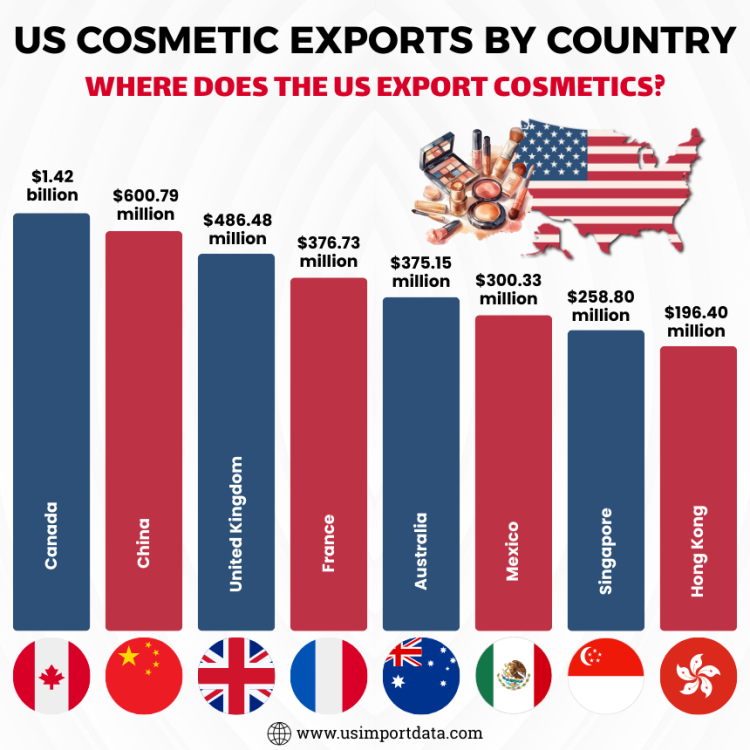
US Cosmetic Exports by Country reveal the diverse destinations where the US exports cosmetics. Major markets for US cosmetic exports include countries such as Canada, Mexico, China, Japan, and the United Kingdom. These countries represent significant opportunities for US cosmetic companies to expand their global footprint and cater to international consumers. The top 10 export destinations for US cosmetic exports, as per the US shipment data for 2024-25, include:
1. Canada: $1.42 billion (23%)
Canada is one of the largest importers of cosmetics from the United States. With a market worth $1.42 billion, Canada accounts for 23% of US cosmetic exports. The proximity between the two countries and the similarities in consumer preferences make Canada an attractive market for US cosmetic companies.
2. China: $600.79 million (9.7%)
China is another significant market for US cosmetic exports, with a total value of $600.79 million. The growing middle class and increasing disposable income in China have led to a surge in demand for high-quality beauty products from the US. Despite the challenges of entering the Chinese market, many US cosmetic brands have found success in this lucrative market.
3. United Kingdom: $486.48 million (7.9%)
The United Kingdom is a popular destination for US cosmetic exports, with a total value of $486.48 million, as per the data on US cosmetic exports to the United Kingdom by HS code. The UK market is known for its strong demand for premium beauty products, making it an attractive market for US cosmetics companies. The cultural similarity between the US and the UK also makes it easier for American brands to establish a presence in this market.
4. France: $376.73 million (6.1%)
France, known for its rich history in the beauty and cosmetics industry, is another key market for US cosmetic exports. With a total value of $376.73 million, France accounts for 6.1% of US cosmetic exports. The French market values quality and innovation in beauty products, making it a competitive yet rewarding market for US cosmetic companies.
5. Australia: $375.15 million (6.1%)
Australia is a growing market for US cosmetic exports, with a total value of $375.15 million. The Australian market is known for its emphasis on natural and organic beauty products, which aligns well with many US cosmetic brands that focus on clean and sustainable beauty. As awareness of beauty trends increases in Australia, US cosmetic exports to this market are expected to continue growing.
6. Mexico: $300.33 million (4.8%)
Mexico is an important market for US cosmetic exports, with a total value of $300.33 million. The Mexican beauty market is diverse and offers opportunities for a wide range of US cosmetic brands, from mass-market products to luxury cosmetics. The proximity of Mexico to the US also makes it a convenient market for American beauty companies to export their products.
7. Singapore: $258.80 million (4.2%)
Singapore is a key market for US cosmetic exports, with a total value of $258.80 million. The strong economy and high living standards in Singapore contribute to the demand for premium beauty products from the US. The beauty industry in Singapore is also known for its innovation and trend-setting, making it an attractive market for US cosmetic companies looking to expand internationally.
8. Hong Kong: $196.40 million (3.2%)
Hong Kong is a popular destination for US cosmetic exports, with a total value of $196.40 million. The city's status as a global financial hub and shopping destination attracts tourists and locals alike, creating a strong demand for US beauty products. The diverse consumer base in Hong Kong also provides opportunities for a wide range of US cosmetic brands to succeed in this market.
9. United Arab Emirates: $187.46 million (3%)
The United Arab Emirates is a growing market for US cosmetic exports, with a total value of $187.46 million. The UAE market is known for its luxury and premium beauty products, making it an attractive destination for US cosmetic companies. The strong demand for top-quality beauty products and the high standards of living in the UAE create opportunities for US cosmetic brands to thrive in this market.
10. Netherlands: $185.10 million (3%)
The Netherlands is a competitive market for US cosmetic exports, with a total value of $185.10 million, as per the data on US cosmetics exports to the Netherlands. The Dutch market values innovation and sustainability in beauty products, which aligns well with many US cosmetic brands. The cultural diversity in the Netherlands also creates opportunities for US cosmetic companies to introduce unique and innovative beauty products to this market.
Top Cosmetic Manufacturers & Suppliers in USA: US Cosmetic Exporters Database
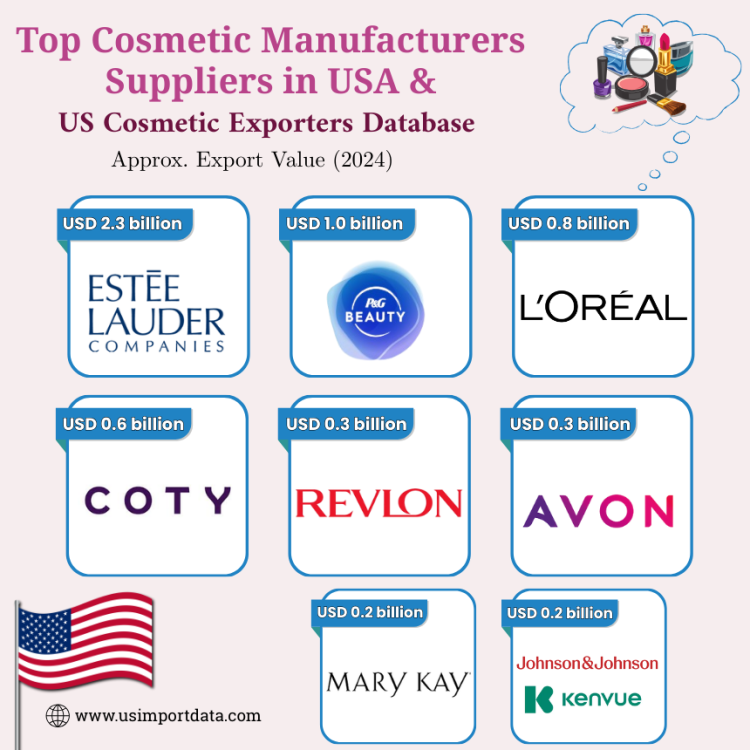
When it comes to the beauty industry, finding reliable suppliers and manufacturers is vital for businesses looking to offer high-quality cosmetic products. In the USA, the US Cosmetic Exporters Database stands out as a valuable resource for companies seeking top cosmetic manufacturers and suppliers. This database is a go-to source for industry professionals seeking to connect with reputable cosmetic companies, providing access to a diverse range of products and solutions. The leading cosmetic manufacturers & suppliers in the USA, as per the US cosmetic exporters data & cosmetic suppliers list for 2025, include:
|
Company Name |
Approx. Export Value (2024) |
Top Exported Types |
Top Export Markets |
|
USD 2.3 billion |
Skincare, makeup, fragrances |
Europe, China, the Middle East |
|
|
Procter & Gamble (Beauty) |
USD 1.0 billion |
Skincare, haircare |
Latin America, Europe |
|
L’Oréal USA |
USD 0.8 billion |
Makeup, haircare, skincare |
Europe, Asia |
|
Coty Inc. |
USD 0.6 billion |
Fragrances, cosmetics |
Europe, Middle East |
|
Revlon Inc. |
USD 0.3 billion |
Color cosmetics |
Latin America, Asia |
|
Avon Products Inc. |
USD 0.3 billion |
Skincare, makeup |
Latin America, Europe |
|
Mary Kay Inc. |
USD 0.2 billion |
Skincare, cosmetics |
Asia, Europe |
|
Johnson & Johnson / Kenvue |
USD 0.2 billion |
Dermatological skincare |
Europe, Asia |
|
e.l.f. Beauty |
USD 0.15 billion |
Makeup, clean beauty |
Europe, Canada |
|
Too Faced Cosmetics |
USD 0.2 billion |
Makeup, beauty palettes |
Europe, Asia, Middle East |
Additional Insights
Export Concentration
-
The top 3 companies account for nearly 55–60% of the total U.S. cosmetic export value.
-
Skincare dominates export portfolios due to higher unit pricing and repeat demand.
Product Trends
-
Skincare & dermatological products are the highest-value export category.
-
Makeup remains volume-driven but lower in per-unit export value.
-
Clean, clinical, and premium formulations outperform traditional cosmetics abroad.
Market Trends
-
Europe and Asia remain the most valuable export destinations.
-
The Middle East shows strong demand for premium and luxury cosmetics.
-
Latin America is the fastest-growing market for mass-market U.S. beauty brands.
Key Takeaway
In 2024–25, U.S. cosmetic exports are driven by a small group of multinational leaders, supported by a growing private-label and contract manufacturing ecosystem. Export growth is value-led rather than volume-led, with success increasingly tied to innovation, brand trust, and regulatory compliance.
US Cosmetic Exports in the Last 10 Years: Historical US Cosmetic Export Data
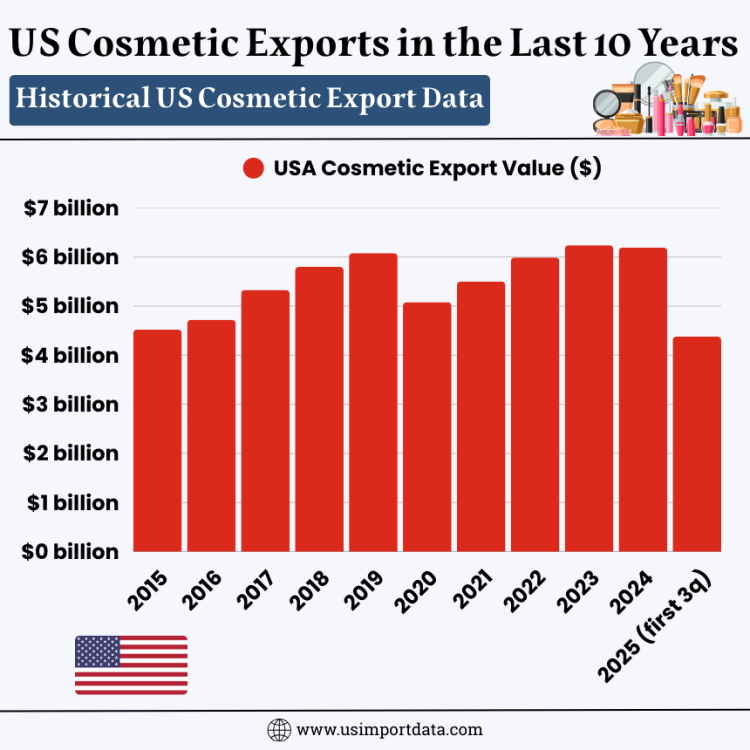
|
Year of Exports |
USA Cosmetic Export Value ($) |
|
2015 |
$4.52 billion |
|
2016 |
$4.72 billion |
|
2017 |
$5.33 billion |
|
2018 |
$5.80 billion |
|
2019 |
$6.08 billion |
|
2020 |
$5.08 billion |
|
2021 |
$5.50 billion |
|
2022 |
$5.99 billion |
|
2023 |
$6.24 billion |
|
2024 |
$6.19 billion |
|
2025 (first 3 quarters) |
$4.38 billion |
Breakdown of U.S. Cosmetic Export Categories
U.S. cosmetic exports are not evenly distributed across product types. Instead, a few categories dominate export value due to higher pricing, repeat demand, and global appeal.
1. Skincare Products (Largest Export Segment)
Skincare products account for approximately 75–80 percent of the total cosmetic export value. This includes:
-
Facial creams and lotions
-
Anti-aging serums
-
Sunscreen and sun-care products
-
Dermatological and clinical skincare
-
Moisturizers, cleansers, and toners
American skincare brands benefit from:
-
Strong associations with scientific research and dermatology
-
Advanced formulation technologies
-
FDA-regulated manufacturing standards that increase buyer confidence
Premium skincare products command higher export prices and often form the backbone of U.S. cosmetic shipments to developed and emerging markets alike.
2. Makeup and Color Cosmetics
Makeup products represent a smaller share by volume but remain strategically important due to brand recognition and global demand.
Exported makeup products include:
-
Foundations and concealers
-
Eye makeup (mascara, eyeliner, eyeshadow)
-
Lip products (lipstick, gloss, balms)
-
Face powders and blush
U.S. makeup exports are driven by:
-
Globally recognized brands
-
Trend-setting product launches
-
Strong influencer-led demand in international markets
Mass-market makeup brands manufactured in the U.S. are widely exported to Latin America, the Middle East, and parts of Asia.
3. Haircare and Specialty Cosmetics
Haircare products and specialty cosmetics account for a smaller but growing share of exports. These include:
-
Shampoos and conditioners
-
Hair treatments and styling products
-
Scalp care solutions
-
Men’s grooming products
-
Organic and clean-label cosmetics
Growth in this category is fueled by:
-
Rising global interest in textured and specialized haircare
-
Demand for sulfate-free, paraben-free, and natural formulations
-
Expansion of male grooming and wellness categories
Key Export Destinations for U.S. Cosmetics
U.S. cosmetics are exported to more than 150 countries, but export value is concentrated in a smaller group of key markets.
Major Destination Regions
North America
-
Canada remains one of the largest and most stable markets for U.S. cosmetics
-
Strong cross-border trade due to geographic proximity and aligned regulations
Europe
-
High demand for U.S. skincare and clinical beauty products
-
Strong presence of prestige brands
-
Competition with European luxury brands remains intense
Asia-Pacific
-
Growing exports to South Korea, Japan, China, and Southeast Asia
-
U.S. brands are often positioned as premium or clinical alternatives
-
Rising middle-class consumption fuels long-term growth
Middle East
-
Strong demand for luxury and premium skincare
-
High per-capita spending on beauty products
-
U.S. brands benefit from trust in product safety and quality
Latin America
-
The expanding middle class drives demand for mass-market and mid-premium cosmetics
-
U.S. brands are widely distributed through retail and direct-selling models
Import vs Export Balance: Understanding the U.S. Position
Despite a strong export performance, the U.S. imports more cosmetics than it exports. In 2024, cosmetic imports exceeded USD 7.5 billion, reflecting high domestic demand and global brand diversity.
Why Imports Matter
-
Imports supplement domestic demand for niche, luxury, and trend-driven products
-
Competition from European and Asian brands pushes U.S. manufacturers to innovate
-
Imported formulations influence domestic product development and trends
However, the U.S. remains a net exporter in certain high-value skincare and dermatological segments, reinforcing its global manufacturing relevance.
Contract Manufacturers and Private-Label Suppliers
Beyond multinational brands, the U.S. cosmetics export ecosystem is supported by hundreds of contract manufacturers that produce cosmetics for export-oriented brands.
Role of Contract Manufacturing
-
Enables startups and mid-size brands to access global markets
-
Supports private-label exports for retailers and distributors
-
Reduces capital investment for brand owners
Key Capabilities Offered
-
FDA-compliant and GMP-certified manufacturing
-
Custom formulation and R&D
-
Small-batch and large-scale production
-
Export-ready packaging and labeling
This sector is critical to the growth of independent beauty brands entering international markets.
Key Trends Shaping U.S. Cosmetic Exports in 2025
1. Clean and Sustainable Beauty
International buyers are demanding:
-
Vegan formulations
-
Cruelty-free certification
-
Sustainable packaging
-
Transparent ingredient sourcing
U.S. exporters investing in sustainability gain a competitive advantage.
2. Clinical and Dermatology-Backed Products
Products that continue to perform strongly in global markets are positioned as:
-
Science-based
-
Dermatologist-tested
-
Results-driven
3. Digital-First Export Models
Cross-border e-commerce allows:
-
Direct-to-consumer exports
-
Lower entry barriers for small brands
-
Faster global brand expansion
4. Private Label Growth
Retailers and distributors increasingly source private-label cosmetics from U.S. manufacturers, particularly for skincare and haircare.
Challenges Facing U.S. Cosmetic Exporters
-
Rising competition from Asian beauty exporters
-
Currency fluctuations are affecting pricing
-
Diverse regulatory requirements across countries
-
Increasing cost of compliance and raw materials
Despite these challenges, U.S. exporters benefit from strong branding, advanced R&D, and manufacturing reliability.
Outlook for 2025 and Beyond
Looking ahead, U.S. cosmetic exports are expected to:
-
Maintain steady growth in value rather than volume
-
Expand further into emerging markets
-
Benefit from innovation in skincare and clean beauty
-
See increased participation from independent brands
With the right combination of product differentiation, compliance readiness, and market targeting, the U.S. cosmetics industry is well-positioned to remain a global export leader.
Conclusion and Final Thoughts
The U.S. cosmetic export market in 2024–25 reflects a mature yet dynamic industry built on innovation, quality, and global trust. With exports valued at over USD 6 billion, the United States continues to play a vital role in supplying beauty products to the world. From global giants like Estée Lauder and P&G to agile private-label manufacturers and contract suppliers, the U.S. export ecosystem is diverse, competitive, and resilient. As consumer preferences evolve toward clean, clinical, and sustainable beauty, American cosmetic manufacturers are well-placed to capture future growth.
We hope that you liked our data-driven & interactive blog report on the US cosmetic export data 2025. To access the latest US import-export data, or to search live data on US cosmetic exports by country, visit USImportdata. Contact us at info@tradeimex.in for customized trade reports, market insights, & a database of verified cosmetic exporters & suppliers in the USA, tailored to your requirements.
What's Your Reaction?