Top Olive Oil Importers & Buyers in USA | US Olive Oil Imports 2024–25
Discover US olive oil imports data, top olive oil importers & buyers in USA. Explore market growth, key players, and future market trends.
The USA has become one of the most influential markets in the global olive oil trade. While production is modest compared to Mediterranean countries, the U.S. is among the largest importers of olive oil worldwide, shaping demand, prices, and supply chain strategies. According to the US import data and olive oil import data of the USA, the total value of the US olive oil imports reached $3.28 billion in 2024, a massive increase of 50% from the previous year. According to the US olive oil import data, the US imported olive oil worth $1.44 billion in the first two quarters of 2025. Businesses interested in importing olive oil to usa must understand regulatory requirements, quality standards, and sourcing strategies, as olive oil import USA trends show rising demand across retail and foodservice sectors, and companies planning on importing olive oil into the US often focus on reliable suppliers, compliance with FDA rules, and efficient trade to ensure consistent market access.
The United States is the largest olive oil importer in the world, as per the global trade data. As consumption rises, the market in 2024–25 is being driven by powerful buyers, resilient suppliers, and evolving consumer preferences. This blog dives deep into the data behind U.S. olive oil imports, top olive oil importers & buyers in USA, key players driving growth, and what the future holds for the sector.
The U.S. Olive Oil Import Market at a Glance
The U.S. has firmly established itself as the largest olive oil importer in the world, after the European Union, and ahead of nations like Brazil and Japan. In 2024, the U.S. accounted for:
-
19% of global olive oil imports by value
-
35% of global imports by volume
The market is expanding at a brisk pace: imports rose 17–18% year-on-year in 2023, followed by a surge of nearly 50% in the last 12 months leading into 2024. While part of this growth reflects higher global prices, it also shows persistent U.S. demand for olive oil across retail, foodservice, and industrial buyers.
List of Top Olive Oil Importers and Buyers in the US: USA Olive Oil Importers Data
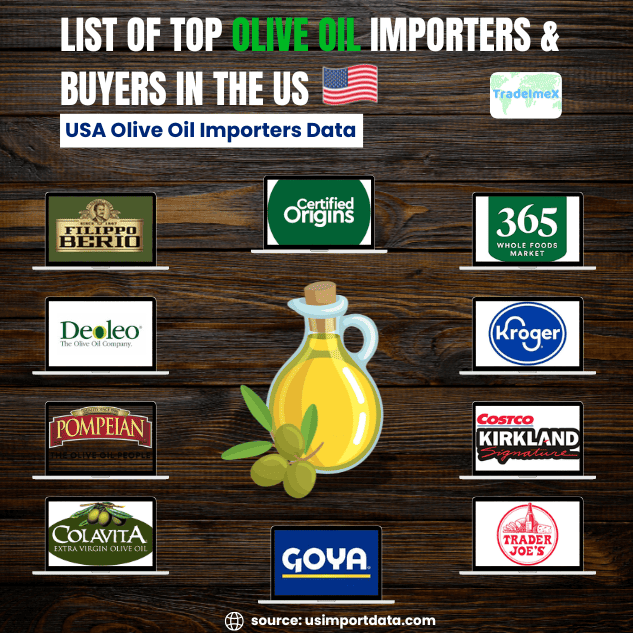
The USA Olive Oil Importers Database is a valuable resource for businesses seeking to establish connections within the olive oil industry. This comprehensive list outlines key olive oil importers and buyers in the United States, providing essential data to facilitate successful partnerships and collaborations. The top 10 leading olive oil importers & buyers in the USA, as per the US olive oil importers data & USA buyers data for 2024-25, include:
|
Rank |
Importer (USA) |
Approx. Import Value (2024) |
Main Olive Oil Types |
Top Import Sources |
|
1 |
Certified Origins Inc |
$850M–$900M |
Extra Virgin, Bulk, Private Label |
Spain, Italy, Tunisia |
|
2 |
Filippo Berio USA Ltd |
$400M–$450M |
Branded EVOO, Organic, Blends |
Italy, Spain |
|
3 |
Deoleo USA Inc (Bertolli, Carapelli) |
$350M–$400M |
EVOO, Light, Pure Olive Oil |
Spain, Italy |
|
4 |
Pompeian Inc |
$300M–$330M |
EVOO, Classic Olive Oil, Sprays |
Spain, Tunisia |
|
5 |
Colavita USA |
$250M–$270M |
EVOO, Flavored, Specialty Oils |
Italy, Argentina |
|
6 |
Goya Foods Inc |
$200M–$220M |
EVOO, Pure, Blended Oils |
Spain, Tunisia |
|
7 |
Amazon / Whole Foods 365 |
$150M–$170M |
Organic EVOO, Private Label |
Spain, Italy |
|
8 |
Kroger (Private Label) |
$140M–$160M |
EVOO, Organic & Conventional |
Spain, Greece |
|
9 |
Costco (Kirkland Signature) |
$130M–$150M |
EVOO, Organic & Blends |
Italy, Spain, Greece |
|
10 |
Trader Joe’s (Private Label) |
$90M–$110M |
Organic EVOO, Specialty Oils |
Greece, Spain |
US Olive Oil Imports by Country: Where Does the US Import Olive Oil From?
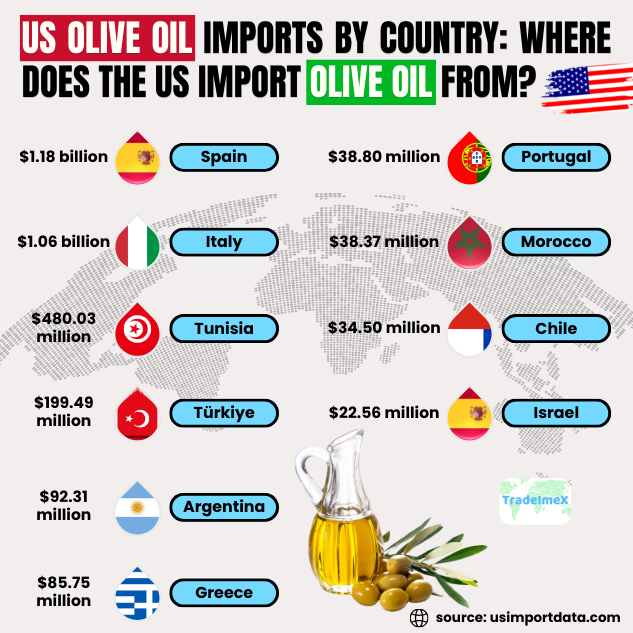
US olive oil imports play a significant role in the American market, sourced from various countries to meet consumer demand. The US primarily imports olive oil from Spain, followed by Italy, Tunisia, and Greece. Each of these countries has a unique history of olive oil production, contributing to the diverse flavors and quality found in the American market. The top 10 import partners for US olive oil imports, as per the US shipment data and US olive oil import statistics for 2024-25, include:
1. Spain: $1.18 billion (36.2%)
Spain is the largest exporter of olive oil to the United States, accounting for 36.2% of total imports, as per the data on US olive oil imports from Spain. Spanish olive oil is known for its high quality and diverse range of flavors, making it a popular choice among American consumers.
2. Italy: $1.06 billion (32.4%)
Italy is another significant player in the US olive oil market, accounting for 32.4% of total imports, as per the data on US olive oil imports from Italy by HS code. Italian olive oil is renowned for its rich taste and versatility, making it a staple in many American households.
3. Tunisia: $480.03 million (14.6%)
Tunisia is a key supplier of olive oil to the United States, representing 14.6% of total imports. Tunisian olive oil is celebrated for its fruity flavor and exceptional quality, making it a sought-after choice among US consumers.
4. Türkiye: $199.49 million (6.1%)
Turkey is also a notable exporter of olive oil to the US, accounting for 6.1% of total imports. Turkish olive oil is valued for its distinct taste and health benefits, attracting a loyal following among American buyers.
5. Argentina: $92.31 million (2.8%)
Argentina is a smaller but significant player in the US olive oil market, representing 2.8% of total imports. Argentine olive oil is prized for its smooth texture and mild flavor, making it a popular choice for cooking and dressing salads.
6. Greece: $85.75 million (2.6%)
Greece is renowned for its rich history of olive oil production, accounting for 2.6% of total imports to the US. Greek olive oil is known for its robust taste and high nutritional value, appealing to health-conscious consumers.
7. Portugal: $38.80 million (1.2%)
Portugal is a smaller but noteworthy supplier of olive oil to the United States, representing 1.2% of total imports. Portuguese olive oil is admired for its unique flavor profile and artisanal production methods, making it a popular choice among gourmet chefs.
8. Morocco: $38.37 million (1.2%)
Morocco is a rising star in the US olive oil market, accounting for 1.2% of total imports. Moroccan olive oil is prized for its delicate flavor and organic cultivation practices, making it a sustainable choice for environmentally conscious consumers.
9. Chile: $34.50 million (1.1%)
Chile is a relatively small but emerging player in the US olive oil market, representing 1.1% of total imports. Chilean olive oil is celebrated for its fresh taste and high quality, appealing to discerning American buyers.
10. Israel: $22.56 million (0.7%)
Israel is a niche supplier of olive oil to the United States, accounting for 0.7% of total imports. Israeli olive oil is distinguished by its fruity notes and artisanal production techniques, making it a gourmet choice for food enthusiasts.
USA Olive Oil Imports in the Last 10 Years: Yearly US Olive Oil Import Data
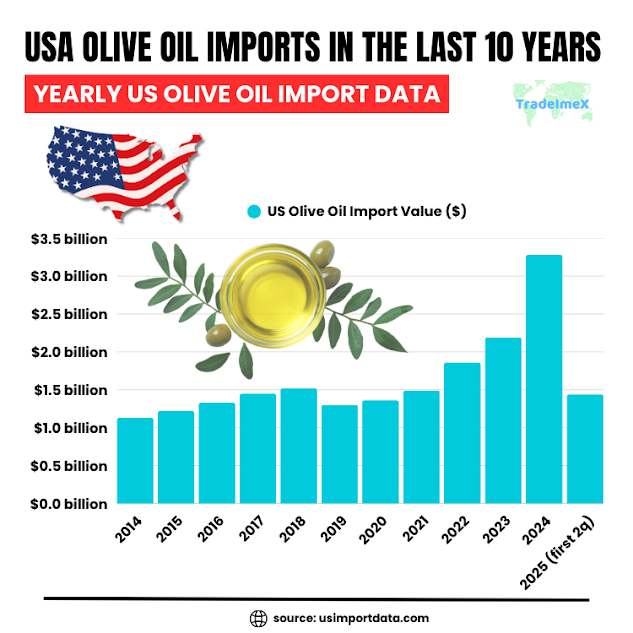
|
Year of Imports |
US Olive Oil Import Value ($) |
|
2014 |
$1.13 billion |
|
2015 |
$1.22 billion |
|
2016 |
$1.33 billion |
|
2017 |
$1.45 billion |
|
2018 |
$1.52 billion |
|
2019 |
$1.30 billion |
|
2020 |
$1.36 billion |
|
2021 |
$1.49 billion |
|
2022 |
$1.86 billion |
|
2023 |
$2.19 billion |
|
2024 |
$3.28 billion |
|
2025 (first 2 quarters) |
$1.44 billion |
Where Does the US Olive Oil Come From?
The olive oil supply to the United States is highly concentrated, with five countries accounting for over 90% of imports in 2024.
1. Spain and Italy: The Powerhouses
Spain and Italy remain the dominant suppliers. Spain’s large-scale production and competitive pricing allow it to capture over a third of the U.S. market, while Italy leverages its branding power—particularly in premium and extra virgin olive oils.
2. Tunisia: The Rising Challenger
Tunisia has emerged as a serious competitor, especially in bulk exports. Favorable harvest conditions and lower production costs make Tunisian olive oil a strong alternative to the European supply.
3. Türkiye and Argentina: Niche but Growing
Both Türkiye and Argentina remain small suppliers, but they are steadily growing their market share by targeting bulk buyers, private-label brands, and niche premium markets.
US Olive Oil Imports by Volume
Beyond value, the U.S. is a volume giant:
-
In the 2024–25 crop year, U.S. imports represented about one-third of all global olive oil imports.
-
Year-over-year, imports grew by 4–5% in volume.
This scale matters. The U.S. is not just a buyer; it sets global benchmarks for pricing, supply reliability, and quality expectations.
Who Are the Biggest US Buyers of Olive Oil?
The U.S. olive oil market is shaped by a mix of multinational giants and niche importers. In terms of shipments handled, a few companies dominate:
-
Certified Origins Inc. – around 34% of shipments
-
Filippo Berio USA Ltd – around 16% of shipments
-
Deoleo USA Inc – around 12% of shipments
-
Thousands of smaller buyers collectively make up the remaining 38%
Why These Companies Matter
-
Certified Origins imports large volumes for both branded and private-label retail products.
-
Filippo Berio USA builds on its Italian heritage, positioning itself as a premium and trusted household brand.
-
Deoleo USA (parent company of Bertolli, Carapelli, and Carbonell) is one of the largest olive oil companies worldwide and a dominant player in American supermarkets.
These companies don’t just supply olive oil; they shape consumer perception, pricing strategies, and category growth.
U.S. Consumer Trends for Olive Oil Driving Demand
Several consumer shifts are fueling olive oil growth in the United States:
-
Health and Wellness Focus: Olive oil, especially extra virgin, is seen as a healthier fat compared to vegetable or seed oils. Its role in the Mediterranean diet makes it appealing to health-conscious consumers, as per the USDA report on US olive oil imports.
-
Premiumization: Consumers are willing to pay more for authenticity, single-origin labeling, cold-pressed products, and organic certification. Premium EVOO is growing faster than refined or blended oils.
-
Cooking Versatility: Olive oil is no longer viewed only as a salad dressing ingredient. Americans use it increasingly for sautéing, baking, and even frying, boosting demand across categories.
-
Cultural Influence: As Mediterranean and Middle Eastern cuisines gain popularity in the U.S., olive oil becomes a staple in restaurant kitchens and households alike.
Market Challenges and Disruptions
The olive oil industry in 2024–25 is not without hurdles:
1) Tariff Uncertainty
New U.S. tariffs threaten to hit European producers, especially Greece. If imposed at 30%, Greek exports to the U.S. could fall by up to 40%. Producers are already seeking alternative markets.
2) Supply Chain Disruptions
A major U.S. port strike in late 2024 disrupted Spanish olive oil shipments, creating delays and bottlenecks. Unlike some commodities, olive oil has few alternatives for quick rerouting, making logistics a key risk factor.
3) Climatic Shocks in Europe
Olive harvests in Spain and Italy are volatile, affected by droughts and heat waves. Poor harvests not only raise global prices but also create uncertainty for U.S. buyers reliant on European supply.
4) Quality and Authenticity Concerns
Reports of adulterated olive oil in the U.S. market remain a challenge. Some estimates suggest that a significant portion of oils labeled “Italian” may actually come from mixed sources. This makes certification and traceability more important than ever.
The Strategic Responses of Suppliers
Facing these risks, exporters and U.S. importers are taking bold steps:
-
Frontloading Exports: European suppliers, particularly Spain, shipped extra volumes ahead of tariff deadlines to lock in sales.
-
Local Investments: Some exporters are considering U.S.-based bottling or blending facilities to bypass tariff exposure.
-
Diversifying Markets: Producers in Greece and Spain are redirecting part of their exports to Brazil, Australia, and Asia to hedge against U.S. policy risks.
-
Building Resilient Supply Chains: Warehousing capacity and diversified shipping routes are becoming more important for large U.S. importers.
US Olive Oil Import Market Snapshot: 2024–25
Here’s a quick snapshot of the U.S. olive oil market:
|
Metric |
Value/Trend (2024–25) |
|
U.S. Share of Global Imports |
19% by value, 35% by volume |
|
Import Growth |
+17.7% (2023), +49.5% (past year by value) |
|
Top Suppliers |
Spain (36%), Italy (32%), Tunisia (15%) |
|
Top Buyers in the US |
Certified Origins (34%), Filippo Berio (16%), Deoleo (12%) |
|
Main Challenges |
Tariffs, logistics, climate shocks, and authenticity concerns |
|
Growth Drivers |
Health trends, premiumization, and Mediterranean cuisine adoption |
The Future of U.S. Olive Oil Imports
The coming years will be pivotal for olive oil in the U.S. Key trends include:
-
Resilience Through Diversification: U.S. olive oil buyers will increasingly rely on Tunisia, Türkiye, and Argentina to balance supply risks from Europe.
-
Premiumization & Branding: While bulk imports will remain vital, brands that emphasize authenticity, origin, and health benefits will capture higher margins.
-
Regulation & Certification: Stricter testing, labeling, and certification could reshape the competitive landscape, weeding out lower-quality oils.
-
Supply Chain Security: Logistics planning will become as important as sourcing, with companies investing in warehousing and alternative shipping options.
Conclusion and Final Thoughts
In conclusion, the U.S. olive oil market in 2024–25 is a story of scale, resilience, and transformation with olive oil importers & buyers leading the charge. As the world’s second-largest importer by value and the largest by volume, the U.S. has an outsized influence on global supply chains.
Spain and Italy remain at the core, but Tunisia, Türkiye, and Argentina are growing fast. Large importers like Certified Origins, Filippo Berio, and Deoleo are driving distribution and branding. Meanwhile, consumers are pushing the market toward healthier, more premium, and more authentic oils. Challenges like tariffs, climate shocks, and logistics will test the industry. But with diversification, innovation, and consumer demand on its side, the U.S. olive oil market is poised to remain one of the most dynamic segments in global agrifood trade.
For more insights into the latest US export-import data or to search live data on US olive oil imports by country, visit USImportdata. Contact us at info@tradeimex.in for customized trade reports, market insights, and get olive oil importers & buyers data of the US, as per your business needs.
What's Your Reaction?