US Mango Import Data 2025: Latest Import Trends & Database of Mango Importers in USA
Explore the latest US mango imports data 2025 and uncover top mango importers in USA and verified mango buyers in USA. Track growing mango imports to US with detailed trade insights.
The United States has quietly become one of the world’s most dynamic mango markets. What was once considered an exotic fruit is now a year-round staple in American households. Behind that shift lies a rapidly expanding import ecosystem driven by changing consumer habits, diversified sourcing, and an increasingly sophisticated importer network. According to the latest US import data and Mango import data of the USA, the total value of US mango imports reached a record-high $1.02 billion in 2025, a 2% increase from the previous year.
The US imported mangoes at a total quantity of 644.44 thousand tons in 2025, as per the US mango import data. The USA is the largest importer of mangoes in the world, according to global trade data. This blog breaks down US mango import data for 2025, highlights key trends shaping the market, and explains how businesses can access and use importer databases to find buyers in the United States.
Overview of US Mango Imports
The US is heavily dependent on imports to meet its mango demand. Domestic mango production is minimal, so imports account for nearly the entire supply for the US mango market.
Key baseline data
-
In 2023, the US imported:
-
554,200 metric tons of fresh mangoes
-
Valued at $571.4 million
-
Including processed forms (frozen, dried, pulp), total imports reached:
-
746,400 tonnes worth $1.11 billion
By 2025, the market will have expanded further:
-
Imports reached record levels, according to industry sources
-
Total shipments crossed 140 million boxes
-
Per capita consumption rose to about 3.7 pounds per year
This reflects a long-term trend. Mango consumption in the US has nearly doubled over the past two decades.
US Mango Import Trends in 2025
1. Strong Growth in Demand
Demand continues to rise due to:
-
Health-conscious consumers
-
Growth of ethnic cuisines (Latin American, Asian)
-
Expansion of retail and foodservice offerings
Industry projections show:
-
19% year-on-year growth in imports in early 2025
-
Continued upward momentum into 2026
At the same time:
-
Mango imports are up 32% compared to 2019 levels
This indicates structural growth, not just short-term fluctuation.
2. Seasonal Supply Dynamics
The US mango market runs on a year-round import calendar, with different countries filling supply gaps.
Seasonal pattern:
-
Mexico: March to September (peak in May)
-
Peru & Ecuador: December to March
-
Brazil: Late summer to fall
Mexican imports dominate:
-
Peak monthly volume exceeded 71,600 metric tons in May
This seasonal diversification ensures a consistent supply and stabilizes prices.
3. Supply Chain Volatility
Despite growth, 2025 also saw disruptions:
-
Weather events (El Niño) affected South American production.
-
Lower Peruvian shipments in the early 2025–26 season.
-
Short-term declines offset by stronger Mexican & Central American supply.
In fact:
-
Mexican exports to the US are expected to grow 10–15%
4. Shipment Volume Fluctuations
Short-term fluctuations exist:
-
Some forecasts indicate an 8% decline in certain 2025–26 periods due to crop issues.
-
However, weekly shipments showed:
-
9% year-on-year increase during peak windows
This highlights a key point: The US mango market is volatile in the short term but strongly upward in the long term.
US Mango Imports by Country: Where Does the US Import Mangoes From?
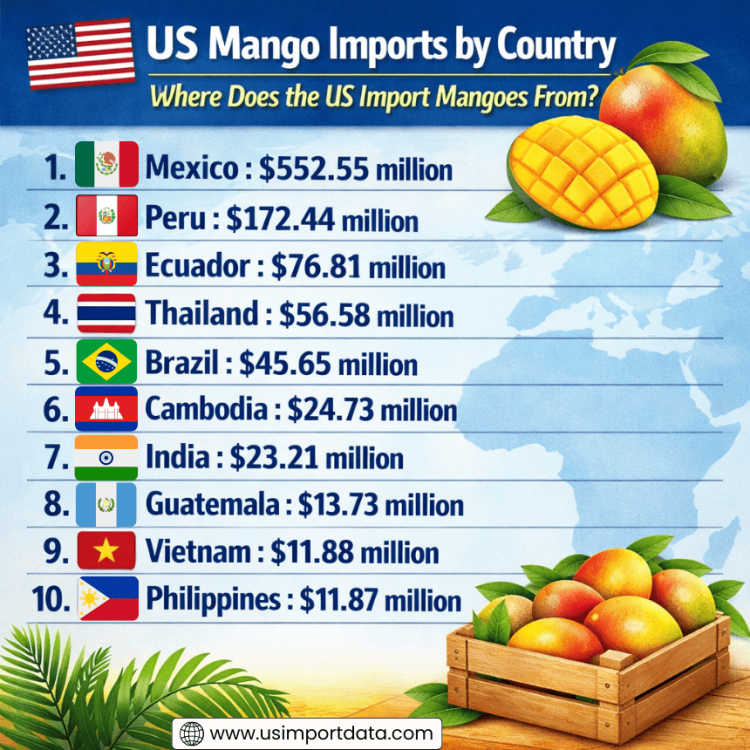
While the US does have its own mango production in states like Florida, where mangoes are grown commercially, the demand for this tropical fruit often exceeds domestic supply. The US mango imports by country indicate the various sources from which the US imports mangoes. The United States primarily imports mangoes from countries like Mexico, Peru, Ecuador, Guatemala, and Brazil, among others. These countries are known for their quality mango production, making them key players in satisfying the US market's demand for this tropical fruit. The top 10 mango supplier countries to the USA, as per the US mango shipment data for 2025, include:
1. Mexico: $552.55 million (54%)
Mexico is the largest supplier of mangoes to the United States, accounting for over half of the total US mango imports. Mexican mangoes are known for their superior quality and taste, making them a popular choice among US consumers. The proximity of Mexico to the US also makes it a convenient source of fresh mangoes year-round.
2. Peru: $172.44 million (16.9%)
Peru is another significant supplier of mangoes to the US market, accounting for nearly 17% of total imports. Peruvian mangoes are prized for their sweetness and flavor, and the country's mango industry has been growing steadily in recent years. Peruvian mangoes are available in the US during the off-season when domestic mango production is limited.
3. Ecuador: $76.81 million (7.5%)
Ecuador is also a key player in the US mango market, supplying approximately 7.5% of total mango imports. Ecuadorian mangoes are known for their unique varieties and exotic flavors, making them a sought-after choice for consumers looking to try something different. The favorable climate and growing conditions in Ecuador make it an ideal location for mango cultivation.
4. Thailand: $56.58 million (5.5%)
Thailand is a significant supplier of mangoes to the US, accounting for 5.5% of total imports, as per the data on US mango imports from Thailand by HS code. Thai mango varieties, such as the popular "Nam Dok Mai" mango, are favored for their sweetness and juiciness. Thailand's tropical climate and rich soil allow for the production of high-quality mangoes that are exported to markets around the world, including the US.
5. Brazil: $45.65 million (4.5%)
Brazil is another important source of mangoes for the US market, contributing 4.5% of total imports. Brazilian mangoes are known for their vibrant colors and rich flavors, making them a favorite among consumers. Brazil's large-scale mango production allows for a consistent supply of mangoes to the US throughout the year.
6. Cambodia: $24.73 million (2.4%)
Cambodia may not be as well-known for its mango exports, but it is still a significant player in the US mango market, supplying 2.4% of total imports. Cambodian mangoes are prized for their unique flavor profiles and high-quality standards, making them a popular choice among US consumers looking for something new and different.
7. India: $23.21 million (2.3%)
India is a major mango-producing country, and its mangoes are highly regarded for their rich flavors & fragrant aromas. While India's share of the US mango market is relatively small at 2.3%, Indian mango varieties, such as the famous Alphonso mango, are highly sought after by mango enthusiasts in the US, as per the data on US mango imports from India.
8. Guatemala: $13.73 million (1.3%)
Guatemala may not be a top mango exporter to the US, but it still plays a significant role in supplying mangoes to the US market, accounting for 1.3% of total imports. Guatemalan mangoes are known for their sweetness and juiciness, making them a popular choice for consumers looking for high-quality mangoes.
9. Vietnam: $11.88 million (1.2%)
Vietnam is a relatively small player in the US mango market, contributing 1.2% of total imports. However, Vietnamese mangoes are gaining popularity for their unique flavors and textures, which set them apart from other mango varieties available in the US market.
10. Philippines: $11.87 million (1.2%)
The Philippines is another emerging supplier of mangoes to the USA, accounting for 1.2% of total imports. Filipino mangoes, particularly the "Carabao" variety, are renowned for their sweetness and smooth texture. The Philippines' tropical climate and fertile soil provide ideal conditions for mango cultivation, resulting in high-quality mangoes that are exported to markets around the world.
USA Mango Importers Database: Top Mango Buyers in USA With Shipment Records
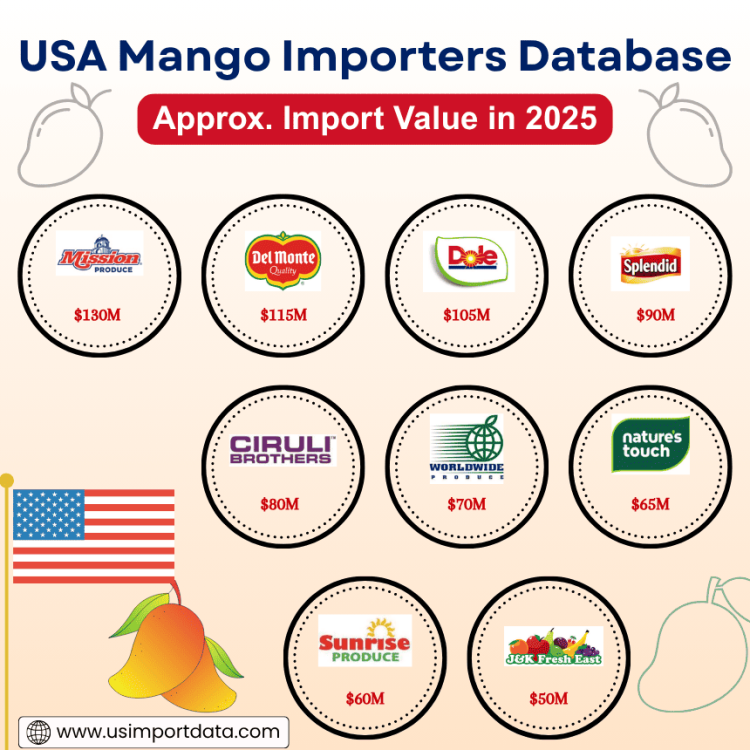
The USA Mango Importers Database provides valuable insights into the top mango buyers in the USA, along with detailed shipment records that help businesses make informed decisions. This comprehensive database is a crucial resource for companies looking to establish partnerships, track competitors, and identify market trends within the American mango import industry. The leading mango importers in the USA, as per the US mango importers data & mango buyers database for 2025, include:
1. Mission Produce Inc.
-
Approx. Import Value in 2025: $130M
-
Top Import Types: Fresh mango (bulk, retail-ready)
-
Top Source Countries: Mexico, Peru, Brazil
2. Fresh Del Monte Produce Inc.
-
Approx. Import Value in 2025: $115M
-
Top Import Types: Fresh mango, pre-cut mango
-
Top Source Countries: Mexico, Ecuador, Guatemala
3. Dole Food Company
-
Approx. Import Value in 2025: $105M
-
Top Import Types: Fresh mango, packaged fruit
-
Top Source Countries: Mexico, Peru, Philippines
4. Splendid Products LLC
-
Approx. Import Value in 2025: $90M
-
Top Import Types: Fresh mango (premium varieties)
-
Top Source Countries: Mexico, Peru
5. Ciruli Brothers LLC
-
Approx. Import Value in 2025: $80M
-
Top Import Types: Fresh mango (retail & wholesale)
-
Top Source Countries: Mexico, Ecuador
6. World Variety Produce Inc.
-
Approx. Import Value in 2025: $70M
-
Top Import Types: Specialty mango, organic mango
-
Top Source Countries: Mexico, India, Thailand
7. Nature's Touch Frozen Foods
-
Approx. Import Value in 2025: $65M
-
Top Import Types: Frozen mango, mango chunks
-
Top Source Countries: Peru, Mexico
8. Sunrise Produce Company
-
Approx. Import Value in 2025: $60M
-
Top Import Types: Fresh mango (foodservice)
-
Top Source Countries: Mexico
9. J&K Fresh East
-
Approx. Import Value in 2025: $50M
-
Top Import Types: Fresh mango (ethnic markets)
-
Top Source Countries: India, Pakistan, Mexico
10. Supreme Cuts Inc.
-
Approx. Import Value in 2025: $45M
-
Top Import Types: Fresh-cut mango, pulp
-
Top Source Countries: Mexico, Peru
Quick Takeaways
-
Top 3 players dominate large-scale imports (bulk + retail supply)
-
Mexico is the leading source for almost every importer
-
Frozen and processed mango segments are growing fast
-
Specialty importers are key for Indian and premium varieties
US Mango Import Data For the Last 10 Years
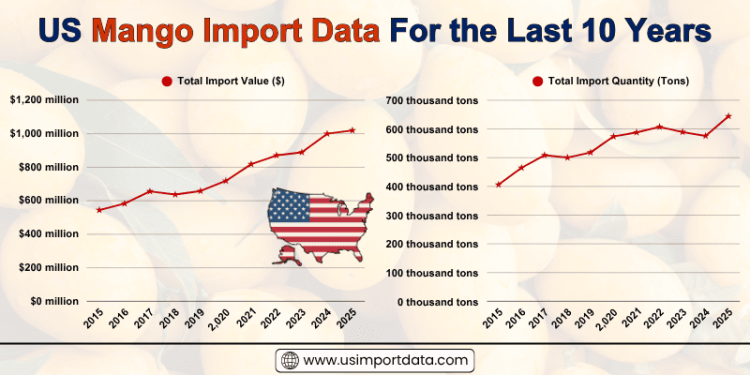
|
Year of Trade |
Total Import Value ($) |
Total Import Quantity (Tons) |
|
2015 |
$544.14 million |
405.96 thousand tons |
|
2016 |
$583.37 million |
464.79 thousand tons |
|
2017 |
$655.95 million |
508.63 thousand tons |
|
2018 |
$637.20 million |
500.41 thousand tons |
|
2019 |
$658.22 million |
518.16 thousand tons |
|
2020 |
$718.78 million |
573.76 thousand tons |
|
2021 |
$818.32 million |
588.01 thousand tons |
|
2022 |
$870.68 million |
607.23 thousand tons |
|
2023 |
$889.34 million |
589.33 thousand tons |
|
2024 |
$1 billion |
575.85 thousand tons |
|
2025 |
$1.02 billion |
644.44 thousand tons |

Product Segmentation in US Mango Imports
US mango imports are not limited to fresh fruit.
Import breakdown:
-
Fresh mangoes: 74% of volume
-
Processed mango (pulp, puree)
-
Frozen mango
-
Dried mango
Interestingly:
-
Dried mango imports are growing fastest in value terms (+19.7%)
This reflects:
-
Growth in snacks and packaged foods
-
Increased demand from food manufacturers
Pricing Trends
Mango import prices in the US have remained relatively stable over time.
-
Average import price: $0.41–$0.46 per pound
However, prices fluctuate based on:
-
Seasonality
-
Supply disruptions
-
Freight costs
Recent trends:
-
Slight price increases due to inflation and trade costs
-
Premium pricing for organic and specialty varieties
US Mango Importer Landscape
1. Structure of the Import Market
The US mango import ecosystem includes:
-
Large importers/distributors
-
Retail chains (direct sourcing)
-
Foodservice suppliers
-
Ethnic market importers
Major import hubs:
-
Los Angeles
-
Miami
-
Houston
-
New York
These ports handle the majority of mango shipments.
Types of Mango Importers
1. Large-scale distributors
-
Supply supermarkets nationwide
-
Handle high-volume imports from Mexico and Peru
2. Specialty importers
-
Focus on organic or premium mangoes
-
Import from India, Thailand, and niche suppliers
3. Ethnic food importers
-
Serve Asian and Hispanic communities
-
Often import specific varieties
4. Food processors
-
Import pulp and frozen mango
-
Supply the beverage and dessert industries
Key Drivers of Mango Imports in the US
1. Consumer Trends
-
Rising demand for tropical fruits
-
Growth of smoothies and healthy snacks
-
Increased awareness of mango nutrition
2. Retail Expansion
-
Supermarkets are expanding exotic fruit offerings
-
Private-label mango products
3. Foodservice Growth
-
Mango used in:
-
Beverages
-
Desserts
-
Sauces
-
Salads
4. Supply Chain Improvements
-
Better cold chain trade
-
Faster shipping
-
Improved ripening technology
These factors allow mangoes to be:
-
Available year-round
-
Delivered in better quality
Challenges in the US Mango Import Market
1. Regulatory Barriers
-
Strict USDA phytosanitary rules
-
Irradiation requirements for certain countries
2. Trade Costs
-
Rising freight charges
-
Port congestion
3. Climate Risks
-
Weather disruptions in supplier countries
-
Impact on yield and pricing
4. Documentation Risks
-
Even small paperwork errors can lead to shipment rejection
Future Outlook (2026 and Beyond)
The outlook for US mango imports remains strong.
Key projections:
-
Continued growth in demand
-
Expansion of supplier base
-
Increased premium and organic segments
Global mango production is expected to grow:
-
From 60 million tons in 2024 to 86 million by 2033.
This will support:
-
Stable supply
-
Competitive pricing
Strategic Insights for Exporters
If you are looking to export mangoes to the US, here’s what matters most:
1. Focus on timing
-
Target supply gaps between major seasons
2. Understand importer needs
-
Volume vs premium buyers
-
Retail vs foodservice
3. Ensure compliance
-
Documentation accuracy is critical
4. Use importer databases
-
Identify active buyers
-
Track demand trends
5. Differentiate your product
-
Organic
-
Specialty varieties
-
Ready-to-eat mangoes
Surge in Mango Demand: Key 2025–2026 Market Signal
One of the most important developments shaping the US mango import market is the sharp surge in consumer demand, as highlighted in recent industry reporting.
According to the National Mango Board, mango demand in the United States has continued to accelerate significantly, reaching record-breaking levels in recent seasons.
1. Record-Breaking Consumption Growth
The US mango market has moved beyond steady growth into a phase of rapid expansion:
-
Total mango volumes surpassed 140 million boxes annually
-
Per capita consumption reached approximately 3.7 pounds per person
-
Demand continues to rise across both retail and foodservice channels
This growth is not seasonal or temporary. It reflects a long-term structural shift in consumer preferences.
2. Drivers Behind the Demand Surge
Several factors are fueling this sharp increase:
Changing consumer behavior
-
Increased preference for healthy, nutrient-rich fruits
-
Mango is positioned as a superfruit due to vitamins A, C, and fiber
Expansion of usage occasions
-
Smoothies and beverages
-
Ready-to-eat fruit packs
-
Desserts and international cuisine
Retail and merchandising improvements
-
Better in-store promotions
-
Year-round availability
-
Improved ripening and quality consistency
3. Impact on US Mango Imports
This surge in demand is directly reshaping import patterns:
-
Import volumes are rising to match consumption growth.
-
Retailers are increasing shelf space for mangoes.
-
Importers are diversifying sourcing countries to ensure an uninterrupted supply.
In particular:
-
Mexico continues to dominate supply.
-
Additional sourcing from Peru, Brazil, and Central America is increasing to meet demand spikes.
Conclusion and Final Thoughts
The US mango import market in 2025 is defined by strong demand, diversified sourcing, and evolving buyer networks. Imports are at record levels, supported by rising consumption and year-round availability. Mexico remains dominant, but new suppliers are gaining traction. At the same time, importer databases have become essential tools for exporters looking to enter or expand in the American market. For businesses, the opportunity is clear: The US mango market is not just growing. It is becoming more data-driven, competitive, and accessible than ever.
Note For Our Readers
We hope you found this blog on US mango import data, latest trends, and top importers in 2025 insightful and useful for understanding the fast-growing dynamics of the US mango market. As consumer demand continues to rise and global supply chains evolve, having access to accurate, timely US export-import data is essential for making smarter export and sourcing decisions.
If you’re looking for deeper insights, customized trade reports, or want to explore live US mango import data by country, importer, or HS code, feel free to connect with USImportdata. We provide comprehensive and up-to-date US mango importers & buyers databases to support your business expansion and market research needs. For exclusive access or tailored US trade data solutions, contact us at info@tradeimex.in today.
Also read about:
What's Your Reaction?